




Categories
Writing is the act of creating a persistent, usually visual representation of language on a surface. As a structured system of communication, writing is also known as written language. Historically, written languages have emerged as a way to record corresponding spoken languages. While the use of language is universal across human societies, most spoken languages are not written. A particular set of symbols, called a script, as well as the rules by which they encode a particular spoken language, is known as a writing system. In some rare cases, writing may be tactile rather than visual.
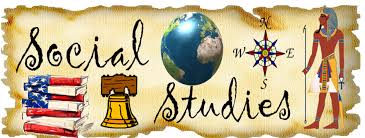
In many countries' curricula, social studies is the combined study of humanities, the arts, and social sciences, mainly including history, economics, and civics. The term was coined by American educators around the turn of the twentieth century as a catch-all for these subjects, as well as others which did not fit into the models of lower education in the United States such as philosophy and psychology. One of the purposes of social studies, particularly at the level of higher education, is to integrate several disciplines, with their unique methodologies and special focuses of concentration, into a coherent field of subject areas that communicate with each other by sharing different academic "tools" and perspectives for deeper analysis of social problems and issues. Social studies aims to train students for informed, responsible participation in a diverse democratic society. It provides the necessary background knowledge in order to develop values and reasoned opinions, and the objective of the field is civic competence. A related term is humanities, arts, and social sciences, abbreviated HASS.
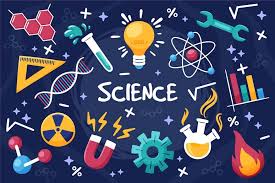
Science is a systematic discipline that builds and organises knowledge in the form of testable hypotheses and predictions about the universe. Modern science is typically divided into two – or three – major branches: the natural sciences, which study the physical world, and the social sciences, which study individuals and societies. While referred to as the formal sciences, the study of logic, mathematics, and theoretical computer science are typically regarded as separate because they rely on deductive reasoning instead of the scientific method as their main methodology. Meanwhile, applied sciences are disciplines that use scientific knowledge for practical purposes, such as engineering and medicine.
A map is a symbolic depiction of interrelationships, commonly spatial, between things within a space. A map may be annotated with text and graphics. Like any graphic, a map may be fixed to paper or other durable media, or may be displayed on a transitory medium such as a computer screen. Some maps change interactively. Although maps are commonly used to depict geographic elements, they may represent any space, real or fictional. The subject being mapped may be two-dimensional such as Earth's surface, three-dimensional such as Earth's interior, or from an abstract space of any dimension.
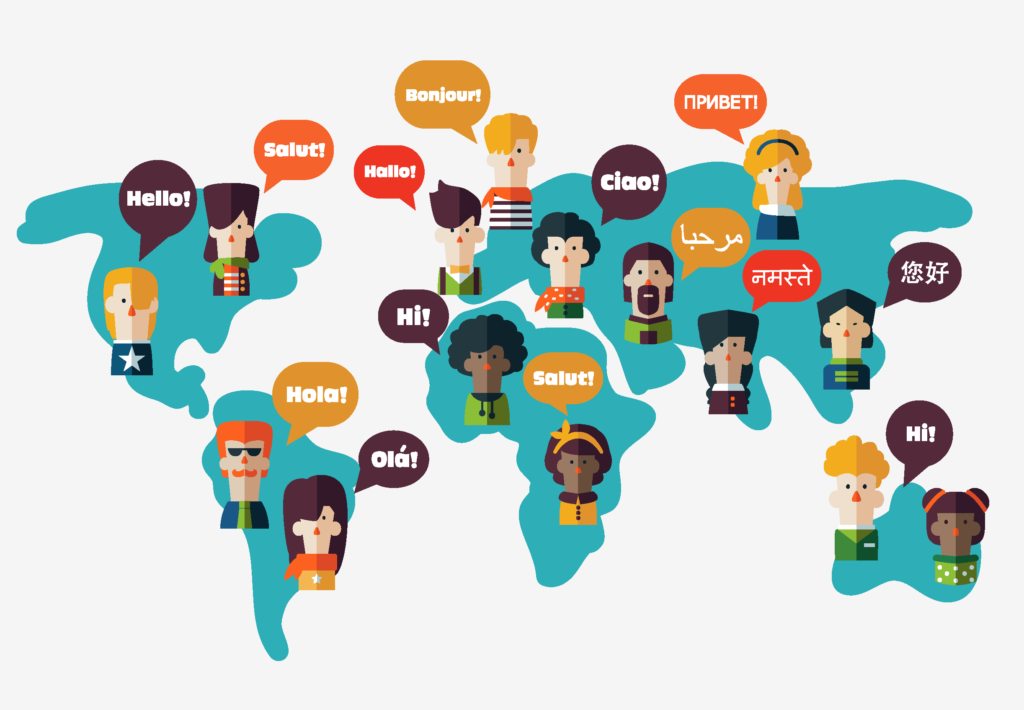
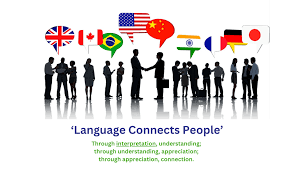
Language is a structured system of communication that consists of grammar and vocabulary. It is the primary means by which humans convey meaning, both in spoken and signed forms, and may also be conveyed through writing. Human language is characterized by its cultural and historical diversity, with significant variations observed between cultures and across time. Human languages possess the properties of productivity and displacement, which enable the creation of an infinite number of sentences, and the ability to refer to objects, events, and ideas that are not immediately present in the discourse. The use of human language relies on social convention and is acquired through learning.
Language is a structured system of communication that consists of grammar and vocabulary. It is the primary means by which humans convey meaning, both in spoken and signed forms, and may also be conveyed through writing. Human language is characterized by its cultural and historical diversity, with significant variations observed between cultures and across time. Human languages possess the properties of productivity and displacement, which enable the creation of an infinite number of sentences, and the ability to refer to objects, events, and ideas that are not immediately present in the discourse. The use of human language relies on social convention and is acquired through learning.
History is the systematic study of the past, focusing primarily on the human past. As an academic discipline, it analyses and interprets evidence to construct narratives about what happened and explain why it happened. Some theorists categorize history as a social science, while others see it as part of the humanities or consider it a hybrid discipline. Similar debates surround the purpose of history—for example, whether its main aim is theoretical, to uncover the truth, or practical, to learn lessons from the past. In a more general sense, the term history refers not to an academic field but to the past itself, times in the past, or to individual texts about the past.
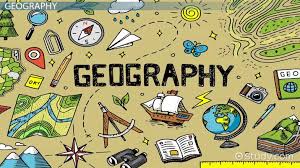
Geography (from Ancient Greek γεωγραφία geōgraphía; combining gê 'Earth' and gráphō 'write', literally 'Earth writing') is the study of the lands, features, inhabitants, and phenomena of Earth. Geography is an all-encompassing discipline that seeks an understanding of Earth and its human and natural complexities—not merely where objects are, but also how they have changed and come to be. While geography is specific to Earth, many concepts can be applied more broadly to other celestial bodies in the field of planetary science. Geography has been called "a bridge between natural science and social science disciplines."



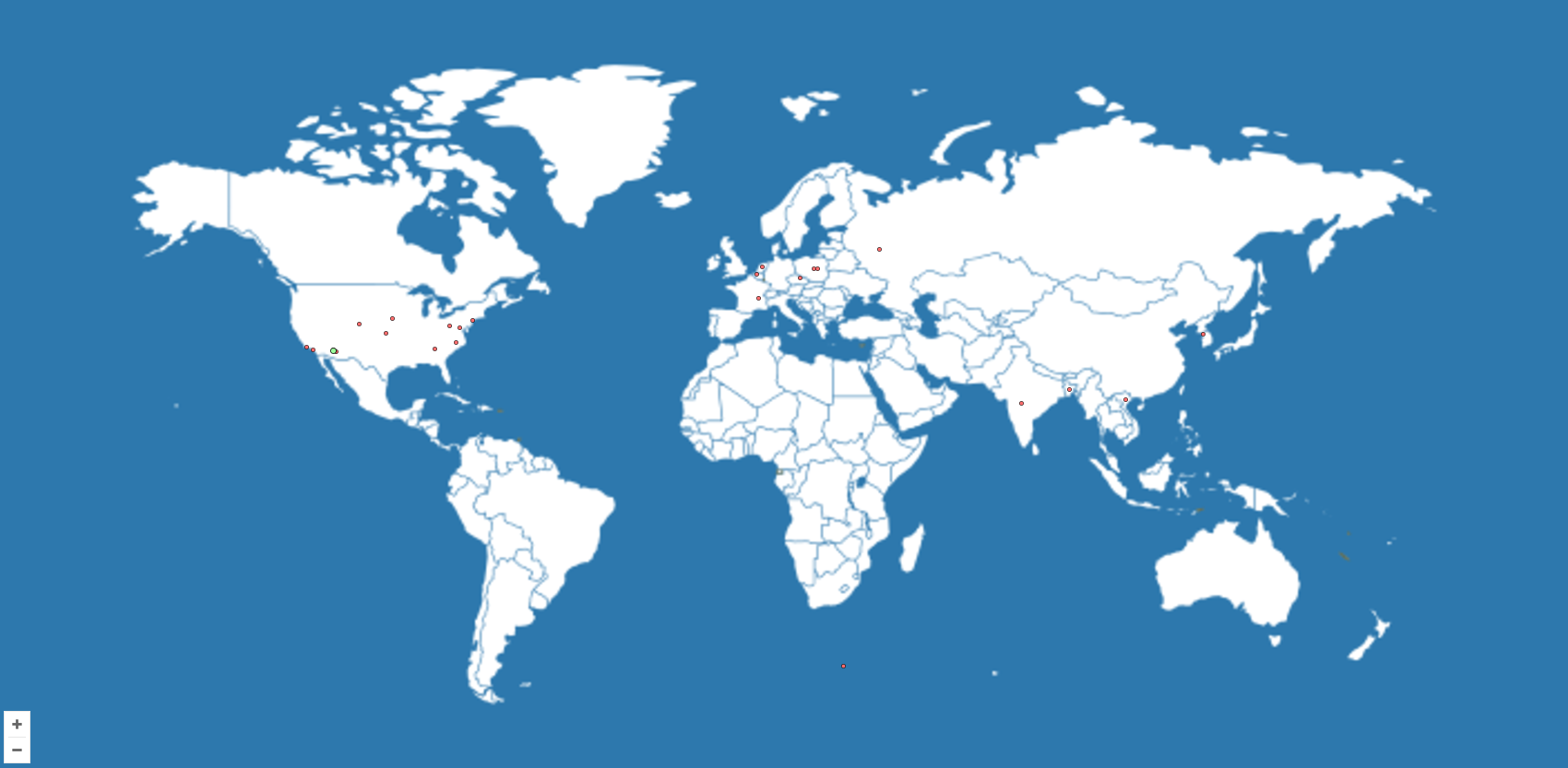
Greg Loucks is a writer, poet, filmmaker, musician, and graphic designer, as well as a creative visionary and faith-driven storyteller working at the intersection of language, meaning, and human connection. Born and raised in Phoenix, Arizona, he has lived in Cincinnati, Ohio; Hot Springs, Arkansas; Williams, Arizona; and Flagstaff, Arizona—each place shaping his perspective, resilience, and creative voice.

United States of America and Europe
Arizona: (928) 563-GREG (4734)
Tennessee: (615) 899-GREG (4734)
Toll-Free: 888-457-GREG (4734)


