




🖊️ Post


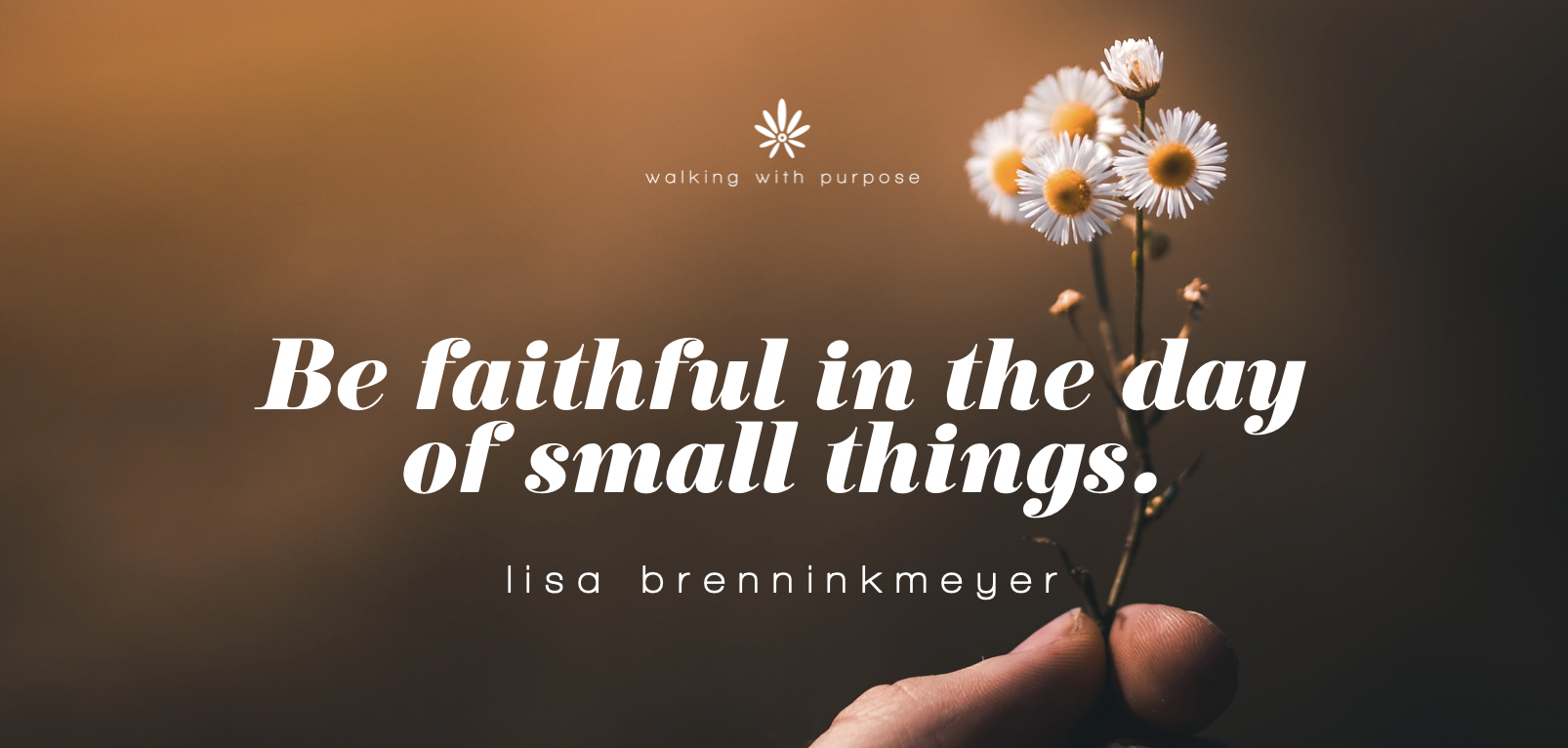
✟ Part 3: Daily Faithfulness: How Small Obedience Builds a Big Life with God
This is Part 3 of a 3-part series on God’s Will, Free Will, and Daily Faithfulness.
Where Faith Becomes Lived
If Part 1 reframed how we think about God’s will, and Part 2 steadied us around freedom and responsibility, Part 3 brings everything down to ground level.
This is where theology becomes practice.
Because most of life is not lived in dramatic crossroads.
It is lived in ordinary days.
And it is in those ordinary days that faith is either formed — or neglected.
The Power of the Ordinary
Many believers assume God works primarily through big moments:
-
Major decisions
-
Clear callings
-
Dramatic confirmations
-
Life-altering events
But Scripture consistently shows God shaping people through the ordinary rhythms of obedience.
-
Moses tended sheep for decades
-
David learned faithfulness in fields, not palaces
-
Jesus spent thirty years in obscurity before public ministry
God is not in a hurry.
And He is not impressed by spectacle.
He is attentive to faithfulness.
Daily Obedience Is How Trust Grows
Faith is not built by knowing more information.
It is built by practicing trust.
Every day presents small invitations:
-
To pray or to rush
-
To tell the truth or to shade it
-
To forgive or to hold resentment
-
To obey quietly or postpone obedience
Pull Quote: Big faith is built through small obedience, repeated over time.
No single choice seems monumental.
But together, they shape the direction of a life.
God’s Will Is Often Unremarkable — and That’s the Point
Many people miss God’s will because they expect it to feel extraordinary.
But most of God’s will feels:
-
Unspectacular
-
Repetitive
-
Hidden
-
Unnoticed by others
That does not make it unimportant.
It makes it formative.
“Whoever is faithful in very little is also faithful in much.” (Luke 16:10)
God uses the small to prepare us for the greater.
Faithfulness Before Clarity
We often say, “If God would just show me the bigger picture, I would obey.”
But Scripture shows the opposite pattern:
Clarity follows obedience.
Israel received daily manna, not weekly stockpiles.
Direction came one step at a time.
God trains trust before He grants vision.
Why Consistency Matters More Than Intensity
Many people burn out spiritually not because they lack passion, but because they lack rhythm.
They rely on:
-
Emotional highs
-
Rare spiritual moments
-
Occasional breakthroughs
Instead of steady faithfulness.
God shapes people through:
-
Consistent prayer
-
Regular repentance
-
Ongoing humility
-
Repeated trust
This is slow work.
And it lasts.
What God Is Actually Building
When we focus only on outcomes, we miss what God is forming.
God is not just directing circumstances.
He is forming:
-
Character
-
Discernment
-
Endurance
-
Humility
-
Love
“He who began a good work in you will carry it on to completion.” (Philippians 1:6)
God’s will is not just about what happens to you.
It is about what happens in you.
Faithfulness Even When Nothing Changes
Some of the hardest seasons are those where obedience doesn’t seem to produce visible results.
Prayers feel unanswered.
Progress feels slow.
Circumstances remain unchanged.
But faithfulness is not validated by outcomes.
It is validated by trust.
God often does His deepest work below the surface.
The Long Arc of Trust
When you look back over time, something becomes clear:
God rarely wastes obedience.
What felt small in the moment often becomes significant in hindsight.
A prayer.
A habit.
A decision to trust when fear would have been easier.
These accumulate.
Faith compounds.
Living Without Anxiety About the Future
Daily faithfulness frees us from obsession with the future.
You do not need to solve your entire life.
You only need to be faithful today.
“Do not worry about tomorrow, for tomorrow will worry about itself.” (Matthew 6:34)
God meets us where we are — not where we imagine we should be.
A Closing Word on God’s Will
God’s will is not fragile.
It does not collapse because of imperfect decisions.
It unfolds through daily surrender.
Step by step.
Choice by choice.
Day by day.
Final Invitation
If you are:
-
Seeking God sincerely
-
Walking in what you already know
-
Willing to repent and return
-
Trusting Him with the unseen
Then you are participating in God’s will.
Right now.
Not someday.
The Quiet Finish
God is not rushing you toward an ending.
He is walking with you through today.
And as you walk, He is building something durable.
A life of faith.
A heart that trusts.
A relationship that deepens.
That is God’s will.
Always has been.
Sources & Further Reading For Part 1-3
The following sources inform the biblical, theological, and pastoral foundations of this three-part series. They are offered not as rigid systems, but as faithful companions for thoughtful Christians seeking depth, balance, and clarity.
Scripture (Primary Authority)
-
Genesis 12; 50:20
-
Exodus 13; 16
-
Joshua 24:15
-
Psalm 119:105
-
Proverbs 3:5–6
-
Matthew 6:34; 11:21; 16
-
Luke 16:10
-
John 15
-
Romans 8
-
Ephesians 1
-
Philippians 1:6
-
1 Thessalonians 4:3
Theological & Pastoral Works
-
Augustine of Hippo — On Free Choice of the Will
-
Thomas Aquinas — Summa Theologica (on providence and human action)
-
John Calvin — Institutes of the Christian Religion (divine sovereignty)
-
Jacobus Arminius — Works of Arminius (human freedom and responsibility)
-
Luis de Molina — Concordia (middle knowledge)
-
Dallas Willard — The Divine Conspiracy
-
Eugene Peterson — A Long Obedience in the Same Direction
-
N.T. Wright — After You Believe
-
C.S. Lewis — Mere Christianity; The Problem of Pain
Contemporary Christian Thought
-
William Lane Craig — writings on Molinism and divine foreknowledge
-
J.I. Packer — Evangelism and the Sovereignty of God
-
Tim Keller — sermons and essays on guidance and vocation
-
Henri Nouwen — The Way of the Heart
Guiding Frameworks Reflected in This Series
-
God’s will as relational rather than deterministic
-
Human freedom held alongside divine sovereignty
-
Spiritual formation through daily obedience
-
Faith as practiced trust, not perfect certainty
Related Articles
Search
Subscribe
Donate



Your Statistics
For the care and safety of this prayer space, we gently record the time and location of each visit. This helps us protect sincerity while preserving anonymity.
Your Date and Time
IP Addres:
216.73.216.87
System
- OS Linux n
- PHP 8.3.30
- MySQLi 10.6.25-MariaDB-log
- Time 09:44
- Caching Disabled
- Gzip Disabled
- Users 48
- Articles 315
- Articles View Hits 10443
Website Visitors Map

About Greg Loucks
Greg Loucks is a writer, poet, filmmaker, musician, and graphic designer, as well as a creative visionary and faith-driven storyteller working at the intersection of language, meaning, and human connection. Born and raised in Phoenix, Arizona, he has lived in Cincinnati, Ohio; Hot Springs, Arkansas; Williams, Arizona; and Flagstaff, Arizona—each place shaping his perspective, resilience, and creative voice.

Address:
United States of America and Europe
Phone Numbers:
Arizona: (928) 563-GREG (4734)
Tennessee: (615) 899-GREG (4734)
Toll-Free: 888-457-GREG (4734)

Terms & Conditions
Subscribe
Report
My comments