
Since May 14, 2017 · Head of State

Head of Government of the Fifth Republic


Metropolitan Regions
Overseas Regions
Overseas Collectivities
Antarctica
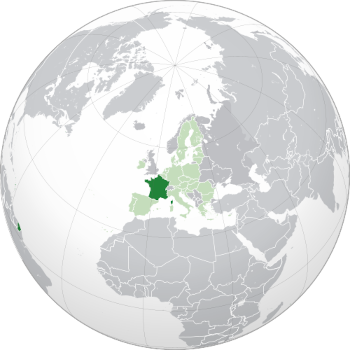
France is a country in Western Europe characterized by diverse landscapes including coastal plains along the Atlantic Ocean and Mediterranean Sea, fertile river valleys, and mountain ranges such as the Alps and the Pyrenees.
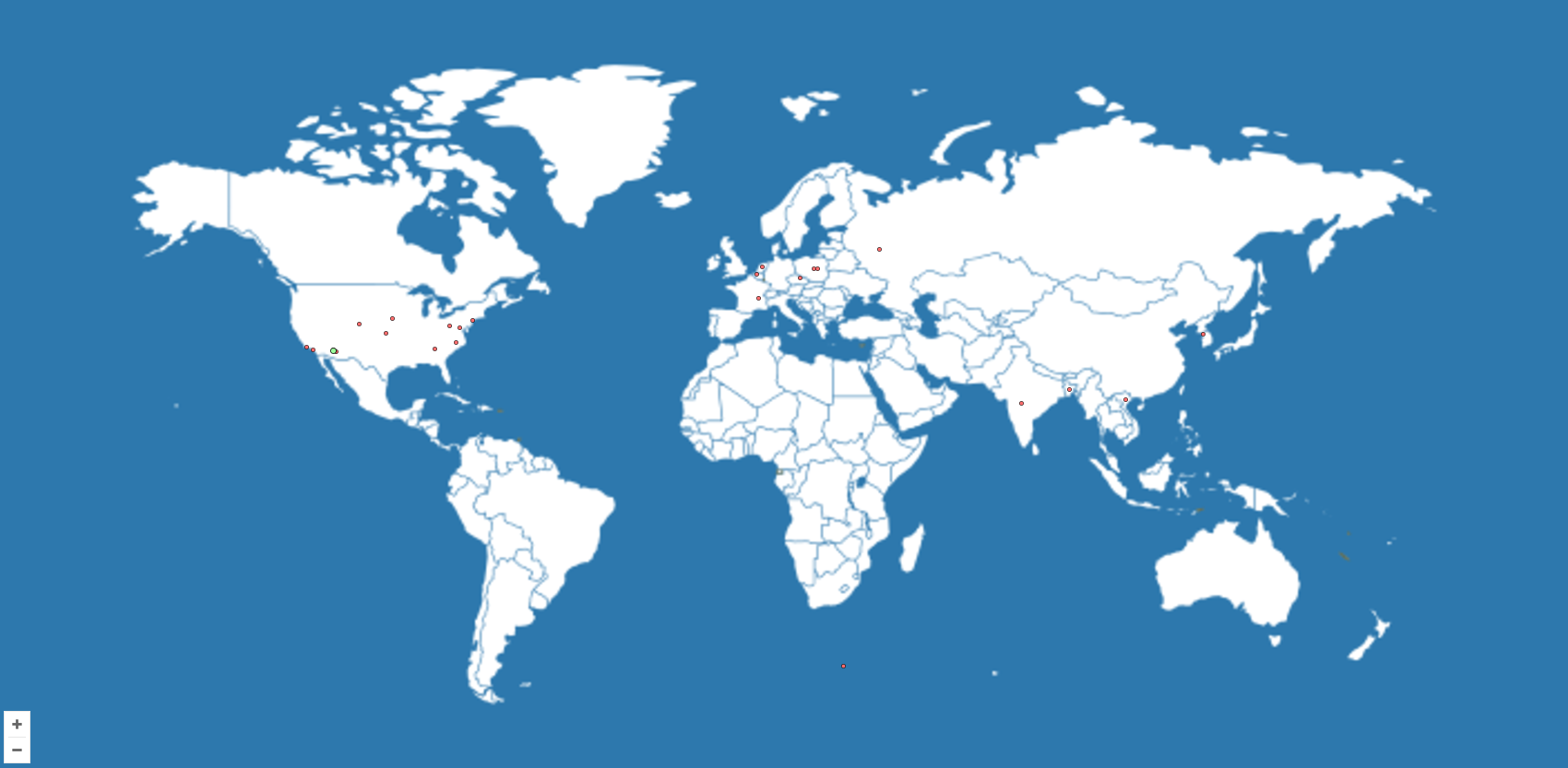
📍 France is a country located in Western Europe, with additional overseas territories around the world. It is positioned along both the Atlantic Ocean and the Mediterranean Sea, making it a major geographic and cultural crossroads in Europe. In mainland Europe, France is bordered by Belgium and Luxembourg to the northeast, Germany, Switzerland, and Italy to the east, Monaco to the southeast, and Spain and Andorra to the south, with coastlines along the Atlantic Ocean to the west and the Mediterranean Sea to the south.
France’s landscape is highly varied, featuring plains and rolling countryside in the north and west, mountain ranges such as the Alps and Pyrenees along its borders, and river systems including the Seine, Loire, and Rhône. Its diverse geography supports agriculture, industry, and tourism. France’s central location in Western Europe has historically made it a key center for trade, culture, and political influence both within Europe and globally.


Metropolitan Regions (Régions)
A

B


Brittany
(Bretagne / Breizh / Bertaèyn / Bertègn)
C


Corsica
(Corse)
G

Grand Est
(Grossa Oschta / Groussen Osten)
H

Hauts-de-France
(Heuts-d'Franche)
I

N

Normandy
(Normandie / Normaundie)

Nouvelle-Aquitaine
(Nòva Aquitània / Akitania Berria / Novéle-Aguiéne)
O

Occitanie
(Occitània)
P

Provence-Alpes-Côte d’Azur
(Provença-Aups-Còsta d'Azur)
Regions are the primary administrative divisions of France. At the second administrative level, metropolitan France is divided into 96 departments, which are grouped within the regions. Total: 13 metropolitan regions
Departments (Départements)
A


C


D

H


I

L

P

R

S

Auvergne-Rhône-Alpes is a region of southeastern France formed in 2016 from the merger of Auvergne and Rhône-Alpes. It is divided into twelve departments, including Ain, Allier, Ardèche, Cantal, Corrèze, Drôme, Haute-Loire, Haute-Savoie, Isère, Loire, Puy-de-Dôme, Rhône, and Savoie. The region is known for its diverse geography, including the Alps, Massif Central, and major cities such as Lyon. Total: 13
Departments (Départements)


Bourgogne-Franche-Comté is a region of eastern France formed in 2016 from the merger of Burgundy and Franche-Comté. It is divided into eight departments: Côte-d'Or, Doubs, Haute-Saône, Jura, Nièvre, Saône-et-Loire, Territoire de Belfort, and Yonne. The region is known for its historic towns, wine production, and cultural heritage. Total: 8
Brittany (Bretagne)
Departments (Départements)


Brittany is a region of northwestern France located on a peninsula extending into the Atlantic Ocean. It is divided into four departments: Côtes-d'Armor, Finistère, Ille-et-Vilaine, and Morbihan. The region is known for its distinct cultural identity, Celtic heritage, and rugged coastline. Total: 4
Departments (Départements)


Centre-Val de Loire is a region of central France known for its historic castles and landscapes along the Loire River. It is divided into six departments: Cher, Eure-et-Loir, Indre, Indre-et-Loire, Loir-et-Cher, and Loiret. The region is often referred to as the "Garden of France" due to its fertile land and cultural heritage. Total: 6
Corsica (Corse)
Departments (Départements)


Corsica is a Mediterranean island region of France with a special territorial status. It is administered as a single territorial collectivity but remains divided into two departments: Corse-du-Sud and Haute-Corse. The region has a distinct cultural identity and geographic separation from mainland France. Total: 2
Departments (Départements)
A


B

H


M


V

Grand Est is a region of northeastern France formed in 2016 from the merger of Alsace, Champagne-Ardenne, and Lorraine. It is divided into ten departments: Ardennes, Aube, Bas-Rhin, Haut-Rhin, Haute-Marne, Marne, Meurthe-et-Moselle, Meuse, Moselle, and Vosges. The region borders several countries, including Germany, Belgium, Luxembourg, and Switzerland, and reflects a blend of cultural influences. Total: 10
Departments (Départements)


Hauts-de-France is a region of northern France formed in 2016 from the merger of Nord-Pas-de-Calais and Picardy. It is divided into five departments: Aisne, Nord, Oise, Pas-de-Calais, and Somme. The region borders Belgium and includes major cities such as Lille and Amiens. Total: 5
Departments (Départements)
E

H

P

S


V


Y

Île-de-France is the region surrounding the French capital and is the most populous region of France. It is divided into eight departments: Essonne, Hauts-de-Seine, Paris, Seine-et-Marne, Seine-Saint-Denis, Val-de-Marne, Val-d'Oise, and Yvelines. Paris functions both as a city and as a department, making it unique within the French administrative system. The region serves as the political, economic, and cultural center of the country. Total: 8
Normandy (Normandie)
Departments (Départements)


Normandy is a region of northwestern France formed in 2016 from the merger of Upper and Lower Normandy. It is divided into five departments: Calvados, Eure, Manche, Orne, and Seine-Maritime. The region is historically significant for events such as the D-Day landings of World War II. Total: 5
Departments (Départements)
C


D


G

L


P

V


Nouvelle-Aquitaine is the largest region in mainland France, formed in 2016 from the merger of Aquitaine, Limousin, and Poitou-Charentes. It is divided into twelve departments: Charente, Charente-Maritime, Corrèze, Creuse, Dordogne, Deux-Sèvres, Gironde, Landes, Lot-et-Garonne, Pyrénées-Atlantiques, Vienne, and Haute-Vienne. The region spans diverse landscapes from the Atlantic coast to the Pyrenees mountains and includes major cities such as Bordeaux. Total: 12
Departments (Départements)
A


G


H


L


P

T


Occitanie is a region of southern France formed in 2016 from the merger of Languedoc-Roussillon and Midi-Pyrénées. It is divided into thirteen departments: Ariège, Aude, Aveyron, Gard, Haute-Garonne, Gers, Hérault, Hautes-Pyrénées, Lot, Lozère, Pyrénées-Orientales, Tarn, and Tarn-et-Garonne. The region stretches from the Mediterranean coast to the Pyrenees mountains and includes major cities such as Toulouse and Montpellier. Total: 13
Departments (Départements)


Pays de la Loire is a region of western France located along the lower Loire River and the Atlantic coast. It is divided into five departments: Loire-Atlantique, Maine-et-Loire, Mayenne, Sarthe, and Vendée. The region includes major cities such as Nantes and is known for its historical sites and coastal landscapes. Total: 5
Provence-Alpes-Côte d’Azur (PACA) Departments (Départements)


Provence-Alpes-Côte d’Azur is a region in southeastern France bordering Italy and the Mediterranean Sea. It includes major cities such as Marseille, Nice, and Toulon, and is known for its coastline, Alps mountains, and cultural heritage. The region is composed of 6 departments. Total: 6
Overseas Regions (Régions d’outre-mer)
F

G

M


R

Overseas regions are integral parts of France with the same legal status as metropolitan regions, but are located outside Europe. All overseas regions are also overseas departments and are fully part of the European Union as outermost regions. Total: 5
Overseas Collectivities (Collectivités d’outre-mer)
F

S


W

Overseas collectivities are self-governing territories of France with varying degrees of autonomy and their own local institutions. Unlike overseas regions, most collectivities are not part of the European Union and have distinct legal and fiscal systems. These territories are located in the Caribbean and the Pacific Ocean. Total: 5
Special Collectivity (Collectivité sui generis)

New Caledonia is a special collectivity (sui generis) of France with a unique constitutional status granting a high degree of autonomy. It is located in the Pacific Ocean and is not fully integrated into the European Union. The territory has held independence referendums as part of an ongoing process regarding its political future. Total: 1
A

A
Amsterdam & Saint Paul Islands
(Research station)
C
Crozet Islands
(Research station)
K
Kerguelen Islands
(Research station)
S
The French Southern and Antarctic Lands (TAAF) consist of an Antarctic claim (Adélie Land) and several subantarctic island groups in the southern Indian Ocean. Adélie Land is the only portion located on the Antarctic continent, while the other districts are remote islands used primarily for scientific research. The Scattered Islands are located separately in the Mozambique Channel near Africa. Total: 1 Antarctic district + 4 subantarctic districts (plus Scattered Islands subgroup)
Historic Provinces (Provinces historiques)
A


B


C

D

Dauphiné
(Dauphiné)
F

Flanders
(Flandre)

Franche-Comté
(Franche-Comté)
G


L

N
Normandy
(Normandie)
O

Orléanais
(Orléanais)
P


T

Touraine
(Touraine)
Historic provinces were the territorial divisions of France before the French Revolution. Note: Not official administrative units today.
Regions (1982–2015) (Régions)
A

Alsace
(Alsace / Elsàss / Elsass)

Aquitaine
(Aquitaine / Aquitània / Akitania)

Auvergne
(Auvèrnhe / Auvèrnha)
B
C

F
Franche-Comté
(Fraintche-Comtè / Franche-Comtât)
I
L

Languedoc-Roussillon
(Lengadòc-Rosselhon)

Limousin
(Lemosin)

Lorraine
(Louréne / Lottringe / Lothringen / Loutrengen)

Lower Normandy
(Basse-Normandie)
M

N

Nord-Pas-de-Calais
(Nord-Pas-Calés / Nôord-Nauw van Kales)
P

Pays de la Loire
(Paeiz de la Leirr / Paes de la Loere / Broioù al Liger)


Provence-Alpes-Côte d’Azur
(Provença-Aups-Còsta d'Azur)
R

Rhône-Alpes
(Rôno-Arpes / Ròse-Aups)
U

Upper Normandy
(Haute-Normandie)
These were the administrative regions of France from 1982 to 2015, before the territorial reform reduced them to 13 metropolitan regions. Total: 22 regions


Road System (Transportation Infrastructure)
Drives On: Right
France follows right-hand traffic regulations.
Electrical System (Power Plug Types)
Primary Plug Types: Type C & Type E
France commonly uses Type C and Type E electrical outlets.
What is the Internet TLD for France?
A top-level domain (TLD) is the last section of a website address that appears after the final dot.Country-code top-level domains are called ccTLDs and are assigned to countries and territories around the world.
Examples:
.us = United States .fr = France .jp = Japan
France uses:
.fr
What is the ISO Code for France?
ISO country codes come from the international standard ISO 3166 created by the International Organization for Standardization (ISO). These codes are used globally in databases, aviation systems, banking, shipping, and international data systems to uniquely identify countries and territories.ISO 3166-1 codes are the two-letter country codes such as US, FR, or JP. These are called Level-1 ISO codes.
Only ISO 3166-1 codes support flag emojis. Flag emojis are created by combining two Unicode regional indicator letters that match the country's ISO two-letter code.
France is assigned the ISO 3166-1 alpha-2 code:
FR
Subdivision codes do not have flag emojis.
ISO-2 Code: FR
ISO-3 Code: FRA
ISO Numeric Code: 250
FR 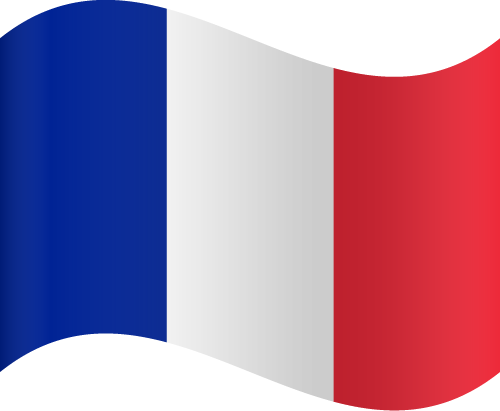 France (ISO 3166-1)
France (ISO 3166-1) Click to Copy Flag
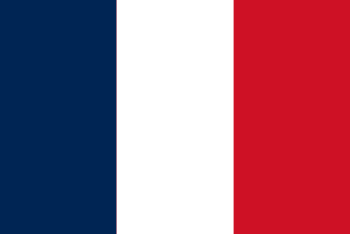
Unicode Flag Code: U+1F1EB U+1F1F7
Click to Copy
🇫🇷 "La Marseillaise" – (French) / "The Song of Marseille"
• Lyrics and music written by Claude Joseph Rouget de Lisle in 1792
• Composed during the French Revolutionary Wars
• Adopted as France’s national anthem in 1795
• Composed during the French Revolutionary Wars
• Adopted as France’s national anthem in 1795
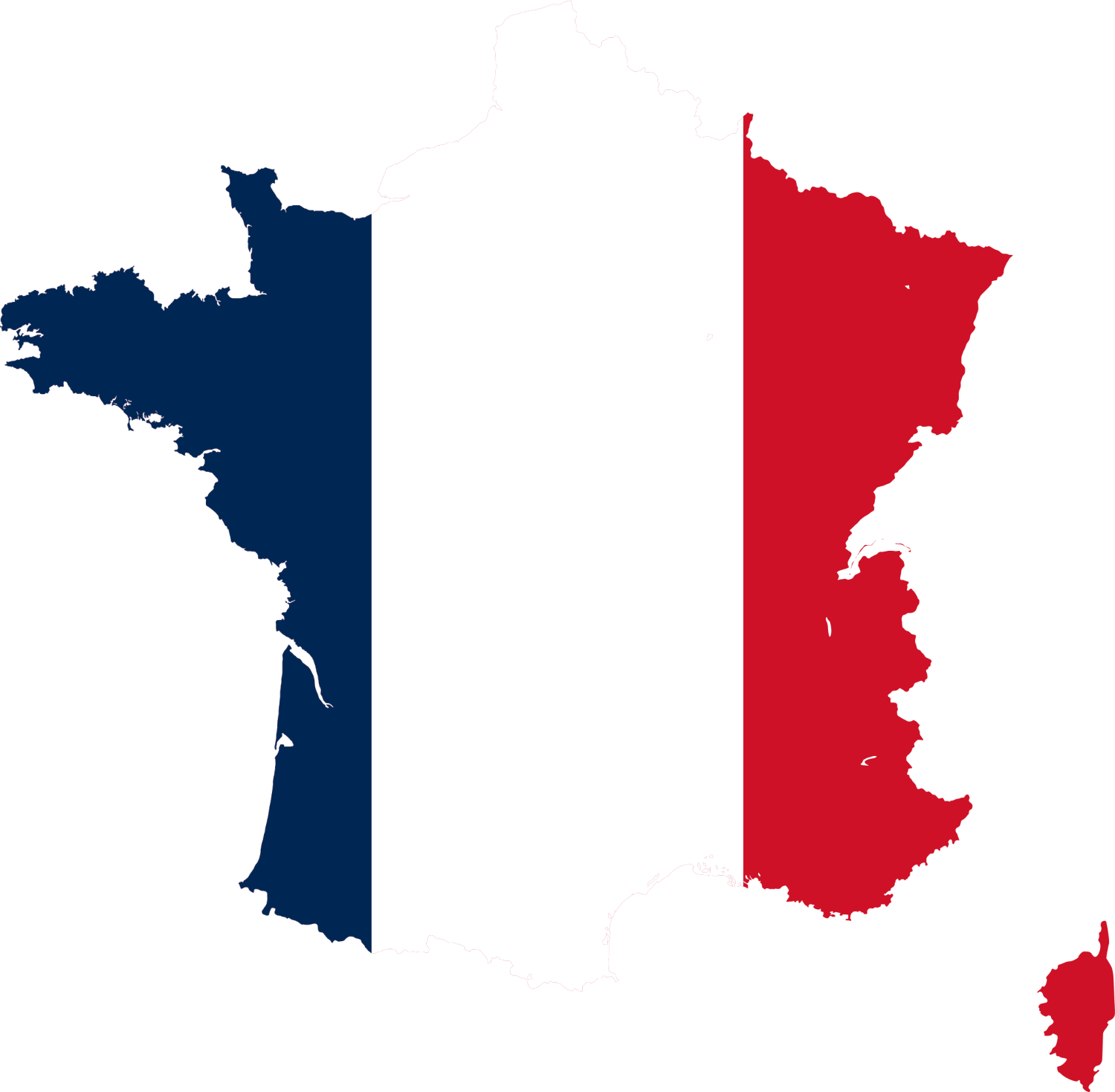
France National Anthem:
"Himno Nacional Argentino"
(Translated from French: “The Marseillese (song)")
National Motto:
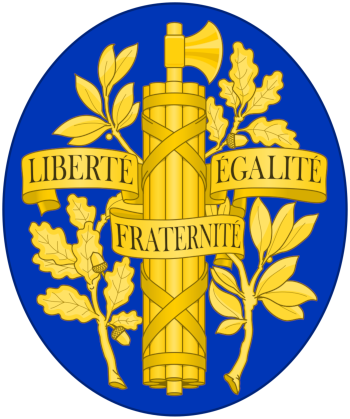
"Liberté, Égalité, Fraternité"
(Translated from French: "Liberty, Equality, Fraternity" (Brotherhood))
MY BLOG
Below is all of my blogs together, from all of my sites.
Cultural Survival, 🇱🇮 Liechtenstein: Small State, Enduring Identity2026-03-18 20:26:58
A Series on Cultural Survival 4 Throughout history, many nations survived because of size,...
Cultural Survival, 🇩🇪 Germany: Identity Through Fragmentation and Reunification2026-03-18 20:25:25
A Series on Cultural Survival 4 Throughout history, some nations survived conquest. Others endured...
Cultural Survival, 🇦🇹 Austria: From Empire to Identity2026-03-18 20:23:46
A Series on Cultural Survival 4 Throughout history, some nations fought to gain power. Others...
SUBSCRIBE
Subscribe To Our Blog (News)
CONTACT ME
There are a few ways to contact me. Important phone calls and emails will be answered in 24 hours.
Office Address
Located in the USA and Europe
Phone Number
Email Address