






🖊️ Post


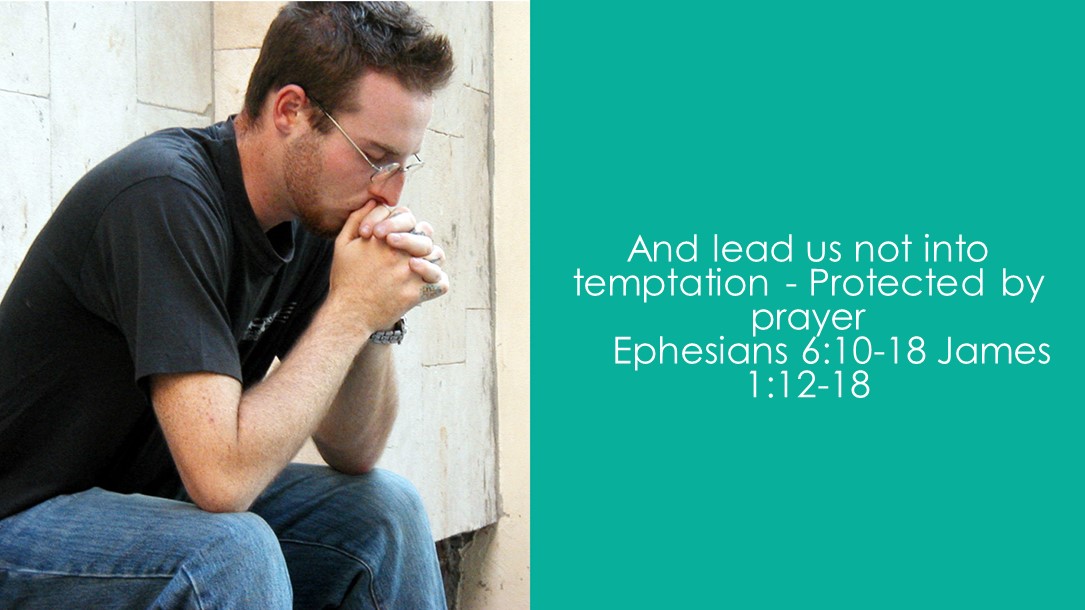
📖 Ephesians 6 Was Never Just About Personal Temptation
Principalities, Powers, Governments, and the War We Pretend Isn’t Happening
Modern Christianity loves to shrink spiritual warfare down to private struggles: anxiety, lust, addiction, bad habits. Important? Yes. Complete? Not even close.
Paul didn’t write Ephesians 6 to suburban believers worrying about personal inconvenience. He wrote it to a persecuted Church living under an empire.
“For we wrestle not against flesh and blood, but against principalities, against powers, against the rulers of the darkness of this world, against spiritual wickedness in high places.”
— Ephesians 6:12
Paul’s language is not metaphorical fluff. These are terms of governance.
Principalities and Powers Are Not Abstract
The Greek words Paul uses—archai (rulers) and exousiai (authorities)—are the same words used elsewhere in Scripture to describe governing structures, dominions, and systems of control.
Paul is saying something radical:
Behind earthly systems of power operate unseen spiritual forces.
That doesn’t mean every politician is “possessed.” It means systems themselves can be influenced, shaped, and steered by spiritual realities—good or evil.
This is not fringe theology. It’s biblical.
The Prophets Were Constantly Political
Anyone claiming “God doesn’t get involved in politics” hasn’t read the Bible.
-
Elijah confronted King Ahab directly—over policy, land theft, and injustice.
-
Nathan rebuked King David publicly.
-
Isaiah, Jeremiah, Amos, Micah all called out governments, courts, and rulers.
-
John the Baptist lost his head for condemning Herod’s sexual immorality.
Biblical prophets didn’t run from power—they exposed it.
Jesus Himself was executed not because He healed people, but because He challenged authority and claimed kingship.
“We have no king but Caesar,” they declared.
— John 19:15
That was not just a theological statement. It was political allegiance.
Spiritual Warfare and Systems of Control
When Paul talks about “rulers of the darkness of this world,” he’s not describing individual demons whispering bad thoughts. He’s describing organized influence—darkness with structure.
This is where many Christians get uncomfortable.
Because once you admit spiritual forces influence systems, you have to ask hard questions:
-
Why are certain forms of corruption repeated across nations?
-
Why do abuse networks often involve power, wealth, secrecy, and silence?
-
Why do ideologies hostile to biblical morality consistently rise through institutions?
You don’t need to believe every conspiracy theory to admit patterns exist.
When Scandals Pull Back the Curtain
Over the last decade, the public has witnessed undeniable exposure of elite abuse networks—not rumors, but documented cases.
-
Jeffrey Epstein was convicted of sex crimes involving minors and maintained relationships with powerful figures.
-
Allison Mack was convicted for her role in NXIVM, a coercive cult operating under self-help branding.
-
R. Kelly was convicted of systemic sexual abuse.
-
Sean “Diddy” Combs has faced serious allegations (which, at the time of writing, remain allegations).
Here’s the point—not that these individuals represent a single hidden cabal, but that power + secrecy + exploitation is not rare. It is recurring.
Scripture tells us it would be.
“For nothing is hidden that will not be made manifest.”
— Luke 8:17
When darkness is exposed, people rush to say, “See? There’s no conspiracy—just bad individuals.”
But Scripture says something deeper:
Systems can be corrupt.
Cultures can normalize evil.
Power can protect sin.
That doesn’t require horns and robes. It requires silence and complicity.
The “New World Order” Language—What People Really Mean
When people talk about a “New World Order,” they are often dismissed as unserious. But historically, the phrase simply means centralized power, global governance, and enforced ideology.
The Bible does not shy away from this concept.
-
Babel was a unified system resisting God.
-
Babylon in Revelation symbolizes an economic, political, and spiritual empire opposed to God.
-
Revelation warns of a future system that controls buying, selling, and allegiance.
You don’t have to assign every headline to prophecy to recognize the trajectory Scripture describes.
Luciferianism: Theology, Not Tabloids
“Luciferian” doesn’t necessarily mean overt devil worship.
Biblically, Lucifer represents:
-
Pride
-
Self-exaltation
-
Autonomy from God
-
Moral inversion (calling evil good)
Isaiah 14 describes a system mindset:
“I will ascend… I will exalt my throne… I will be like the Most High.”
That spirit shows up wherever power rejects accountability to God.
A culture doesn’t need pentagrams to operate under that influence. It just needs self as god.
Why Christians Were Pushed Out of the Public Square
If spiritual warfare includes systems, then removing Christianity from public influence makes sense—from a strategic standpoint.
-
Silence biblical morality
-
Redefine truth as subjective
-
Reduce faith to private feelings
-
Label dissent as “hate” or “dangerous”
This isn’t paranoia. It’s observable secularization.
And it aligns perfectly with Paul’s warning: darkness prefers not to be challenged.
The Armor of God Is Not Passive
Ephesians 6 doesn’t end with fear. It ends with readiness.
Armor is not for retreat.
Armor is for standing.
Truth. Righteousness. Faith. The Word of God.
Not violence. Not domination. Discernment and courage.
Final Thought
You don’t need to believe every theory to recognize this truth:
Spiritual warfare is not only personal.
It is cultural.
It is systemic.
And it is unavoidable.
The prophets understood it.
The apostles preached it.
Jesus confronted it.
The only question is not whether it exists—but whether the Church will continue pretending it doesn’t.
When the Supernatural Is Rebranded: Aliens, UFOs, and the Old Deception in New Language
One of the strangest features of the modern spiritual landscape is that as Western culture rejected Christianity, it did not become secular—it became re-enchanted.
But the enchantment changed its name.
Angels became aliens.
Demons became interdimensional beings.
Visions became abductions.
Possession became channeling.
Spiritual revelation became cosmic disclosure.
The Bible warned this would happen.
“For even Satan disguises himself as an angel of light.”
— 2 Corinthians 11:14
The UFO Phenomenon and Spiritual Substitution
Across decades of research, one consistent pattern appears in UFO and alien-contact narratives:
they rarely point people toward God, repentance, or Christ.
Instead, they emphasize:
-
Hidden knowledge
-
Human evolution
-
Moral relativism
-
A coming global transformation
-
The obsolescence of Christianity
That alone should raise alarms for biblically literate believers.
Bill Cooper and Behold a Pale Horse
Milton William “Bill” Cooper—most famous for Behold a Pale Horse—was not a theologian, but he was one of the earliest public figures to argue that the UFO phenomenon functioned as psychological and spiritual manipulation, not extraterrestrial salvation.
Cooper repeatedly warned that the alien narrative would be used as a unifying myth—a way to replace traditional religion and prepare the public for centralized authority.
One of his most cited claims (summarized, not asserted as fact) was that:
the alien threat narrative could be used to dissolve national sovereignty and justify global governance.
Whether one accepts Cooper’s conclusions or not, his central insight is notable:
belief in aliens often replaces belief in God, not complements it.
Cult Dynamics and “Cosmic” Spirituality
Sociologists and theologians alike have observed that UFO belief systems frequently overlap with cult structures:
-
Charismatic leaders claiming special revelation
-
Secret knowledge withheld from outsiders
-
Sexual exploitation framed as “spiritual”
-
Loss of personal identity
-
Obedience justified as cosmic necessity
This is not speculation. It has been documented repeatedly in groups ranging from Heaven’s Gate to NXIVM-style belief systems that blended mysticism, elitism, and abuse.
The Bible warned about this exact dynamic:
“In later times some will abandon the faith and follow deceiving spirits and teachings of demons.”
— 1 Timothy 4:1
Nephilim, Demons, and the Spirits Behind the Narrative
Within Christian theology, especially among early Church fathers and many modern deliverance teachers, demons are understood not merely as abstract evil—but as disembodied spirits connected to pre-Flood rebellion (Genesis 6).
This view—held by figures ranging from Justin Martyr to Michael Heiser—argues that:
-
The Nephilim were hybrid beings
-
Their spirits remained after judgment
-
These spirits seek embodiment, influence, and worship
Whether one accepts this framework fully or partially, it explains why:
-
Demons seek physical expression
-
They crave authority, influence, and ritual
-
They distort identity and truth
Paul describes this hunger clearly:
“The sacrifices of pagans are offered to demons, not to God.”
— 1 Corinthians 10:20
Power, Ritual, and the Corruption of Desire
Scripture is explicit that spiritual power can be sought through illicit means—and that such power always corrupts.
Throughout the Old Testament, God condemns:
-
Child sacrifice
-
Sexual ritual
-
Blood rites
-
Divination
Not because they were imaginary—but because they were real and spiritually dangerous.
“They sacrificed their sons and daughters to demons.”
— Psalm 106:37
Across cultures, illicit power has often been linked—symbolically or literally—to:
-
Sexual domination
-
Degradation of innocence
-
Ritualized transgression
The New Testament frames this not as superstition, but as spiritual allegiance.
Why the “Alien” Narrative Fits the Age
Aliens require no repentance.
No Savior.
No moral authority.
They offer:
-
Knowledge without accountability
-
Power without holiness
-
Unity without truth
That makes them a perfect substitute religion for a culture that wants the supernatural without God.
The Biblical Warning Remains the Same
Paul never tells believers to fear these forces—but to recognize them.
“Test the spirits to see whether they are from God.”
— 1 John 4:1
Christian discernment does not require believing every theory.
But it does require refusing to be naïve.
Final Word
You do not have to accept every claim made by researchers like Bill Cooper to recognize this reality:
When humanity rejects God, it does not stop believing—it simply believes something else.
The Bible calls those substitutions deception.
And history shows they are rarely harmless.
Related Articles
Search
Subscribe
Donate



Your Statistics
For the care and safety of this prayer space, we gently record the time and location of each visit. This helps us protect sincerity while preserving anonymity.
Your Date and Time
IP Addres:
216.73.216.29
System
- OS Linux n
- PHP 8.3.30
- MySQLi 10.6.25-MariaDB-log
- Time 10:56
- Caching Disabled
- Gzip Disabled
- Users 24
- Articles 315
- Articles View Hits 8357
Website Visitors Map

About Greg Loucks
Greg Loucks is a writer, poet, filmmaker, musician, and graphic designer, as well as a creative visionary and faith-driven storyteller working at the intersection of language, meaning, and human connection. Born and raised in Phoenix, Arizona, he has lived in Cincinnati, Ohio; Hot Springs, Arkansas; Williams, Arizona; and Flagstaff, Arizona—each place shaping his perspective, resilience, and creative voice.

Address:
United States of America and Europe
Phone Numbers:
Arizona: (928) 563-GREG (4734)
Tennessee: (615) 899-GREG (4734)
Toll-Free: 888-457-GREG (4734)

Terms & Conditions
Subscribe
Report
My comments