


🖊️ Post


🌎 Kingdom Nations Series – Part 23 🇧🇦 Bosnia and Herzegovina: Crossroads of Faith, War Memory, and the Quiet Church of the Balkans


4
📖 Introduction: A Global Kingdom Vision (Alphabetical Nations Series)
This continues the comprehensive, alphabetical series covering every country of the world, integrating:
-
The history of Christianity
-
Political and cultural formation
-
Religious demographics
-
Reached vs. unreached people groups
-
Worldview analysis
-
Evangelism strategies
-
Strategic prayer framework
-
Future outlook
Each country has a dedicated one-level page on my website. For Bosnia and Herzegovina:
👉 gregloucks.com/bosnia-and-herzegovina
As with every nation in this series, the Bosnia and Herzegovina page includes:
-
Administrative structure (Federation of Bosnia and Herzegovina, Republika Srpska, Brčko District)
-
Major cities and population centers
-
Religious composition
-
Ethnolinguistic breakdown
-
Economic sectors
-
Historical timeline
-
Reached/unreached classification
-
Strategic evangelism and prayer notes
This is structured Kingdom cartography — geography, theology, sociology, and mission strategy aligned for informed intercession.
We now examine Bosnia and Herzegovina in full depth.
🇧🇦 National Overview
-
Capital: Sarajevo
-
Population: ~3.2 million
-
Region: Western Balkans (Southeastern Europe)
-
Languages: Bosnian, Serbian, Croatian
-
Complex federal structure (post-1995 Dayton Accords)
Bosnia and Herzegovina sits at the crossroads of:
-
Catholic Western Europe
-
Orthodox Eastern Europe
-
Islamic Ottoman heritage
It is one of Europe’s most religiously diverse and historically wounded nations.
“The Most High rules in the kingdom of men.” — Daniel 4:17
📜 Historical Christianity in Bosnia and Herzegovina
1️⃣ Early Christian Roots (Roman & Byzantine Era)
Christianity entered the region during Roman times.
By the early medieval period:
-
Catholic and Orthodox influences spread
-
Bosnia sat between Rome and Constantinople
This geographic position shaped its religious fragmentation.
“You are the light of the world.” — Matthew 5:14
2️⃣ Medieval Bosnian Church
In the Middle Ages:
-
A distinct Bosnian Church emerged
-
It was viewed with suspicion by both Catholic and Orthodox authorities
-
Religious identity was fluid and contested
This period planted early seeds of religious complexity.
3️⃣ Ottoman Era (15th–19th Century)
When the Ottoman Empire conquered the region:
-
Islam spread significantly
-
Many Slavs converted to Islam
-
Catholic and Orthodox communities remained
This period formed Bosnia’s unique tri-religious society:
-
Muslims (Bosniaks)
-
Orthodox Serbs
-
Catholic Croats
“There is neither Jew nor Greek… for you are all one in Christ Jesus.” — Galatians 3:28
4️⃣ Austro-Hungarian Rule (1878–1918)
Under Austro-Hungarian administration:
-
Catholic influence strengthened
-
Modern institutions developed
-
National identities solidified
Religion increasingly intertwined with ethnicity.
5️⃣ Yugoslav Period and War (1918–1995)
Under socialist Yugoslavia:
-
Religion discouraged
-
Secular identity promoted
Following Yugoslavia’s collapse:
-
1992–1995 Bosnian War devastated the nation
-
Ethnic cleansing and genocide occurred
-
Religion became tightly bound to ethnic conflict
Churches, mosques, and communities suffered deep trauma.
“Blessed are the peacemakers.” — Matthew 5:9
📊 Religious Composition
Based on research including Joshua Project:
-
~50% Muslim (Bosniak)
-
~30% Serbian Orthodox
-
~15% Roman Catholic
-
Small Protestant/Evangelical minority
Though religious identity is strong culturally, regular practice varies.
Bosniak Muslims are largely considered unreached from an evangelical perspective.
“The harvest truly is plentiful, but the laborers are few.” — Matthew 9:37
🌍 Ethnolinguistic Groups
Bosniaks
-
Muslim
-
Primarily in Federation of Bosnia and Herzegovina
-
Minimal evangelical presence
Serbs
-
Orthodox
-
Primarily in Republika Srpska
-
Cultural Christianity common
Croats
-
Catholic
-
Concentrated in certain regions
Evangelical believers remain a very small minority across all groups.
🧠 Worldview Analysis
Bosnia’s worldview shaped by:
-
War trauma
-
Ethnic identity politics
-
Religious-national fusion
-
European secular influence
-
Economic hardship
Key spiritual dynamics:
-
Religion equals ethnicity
-
Deep mistrust between groups
-
Youth disillusionment
-
Migration draining population
Evangelism must address:
-
Reconciliation
-
Identity beyond ethnicity
-
Personal faith beyond cultural religion
-
Trauma healing
“He Himself is our peace.” — Ephesians 2:14
⚠️ Spiritual Challenges
1️⃣ Religion as Ethnic Marker
Faith tied to nationality rather than personal conversion.
2️⃣ Post-War Trauma
Collective wounds remain open.
3️⃣ Secular Youth
Many young people disengaged from organized religion.
4️⃣ Political Fragmentation
Complex governance limits unified national movements.
“If the foundations are destroyed, what can the righteous do?” — Psalm 11:3
🔥 Gospel Strengths in Bosnia and Herzegovina
1️⃣ Religious Awareness
Spiritual language widely understood.
2️⃣ Small but Faithful Evangelical Churches
Quiet but steady presence.
3️⃣ International Christian NGOs
Post-war relief built relational bridges.
4️⃣ Openness to Personal Relationship-Based Witness
Trust essential.
“Let your light so shine before men.” — Matthew 5:16
🏙 Urban vs Rural Dynamics
Sarajevo
-
Multicultural capital
-
Historical coexistence of mosque, church, and synagogue
-
Greater exposure to Western culture
Republika Srpska Regions
-
Strong Orthodox identity
Croat-majority Areas
-
Catholic heritage strong
Evangelism must be contextualized to each ethnic region.
🌎 Regional Comparison (Balkans)
Compared to:
-
Serbia (Orthodox majority)
-
Croatia (Catholic majority)
-
Albania (Muslim-majority with evangelical growth)
Bosnia stands uniquely divided along religious lines.
Reconciliation is central to gospel witness here.
🛠 Strategic Evangelism Framework
1️⃣ Reconciliation Ministry
Promote unity in Christ beyond ethnicity.
2️⃣ Trauma Counseling
Address war memory with biblical hope.
3️⃣ Youth Discipleship
Reach generation disconnected from conflict.
4️⃣ Relational Evangelism Among Bosniaks
Respectful dialogue crucial.
5️⃣ Digital Outreach
Online content bypassing geographic division.
“Not by might nor by power, but by My Spirit.” — Zechariah 4:6
🔭 Future Outlook
Possible developments:
-
Continued emigration
-
Secular drift
-
Slow evangelical growth
-
Increased interethnic dialogue
Bosnia could remain divided culturally —
or become a testimony of reconciliation in Christ.
“Behold, how good and how pleasant it is for brethren to dwell together in unity.” — Psalm 133:1
✝ Theological Reflection
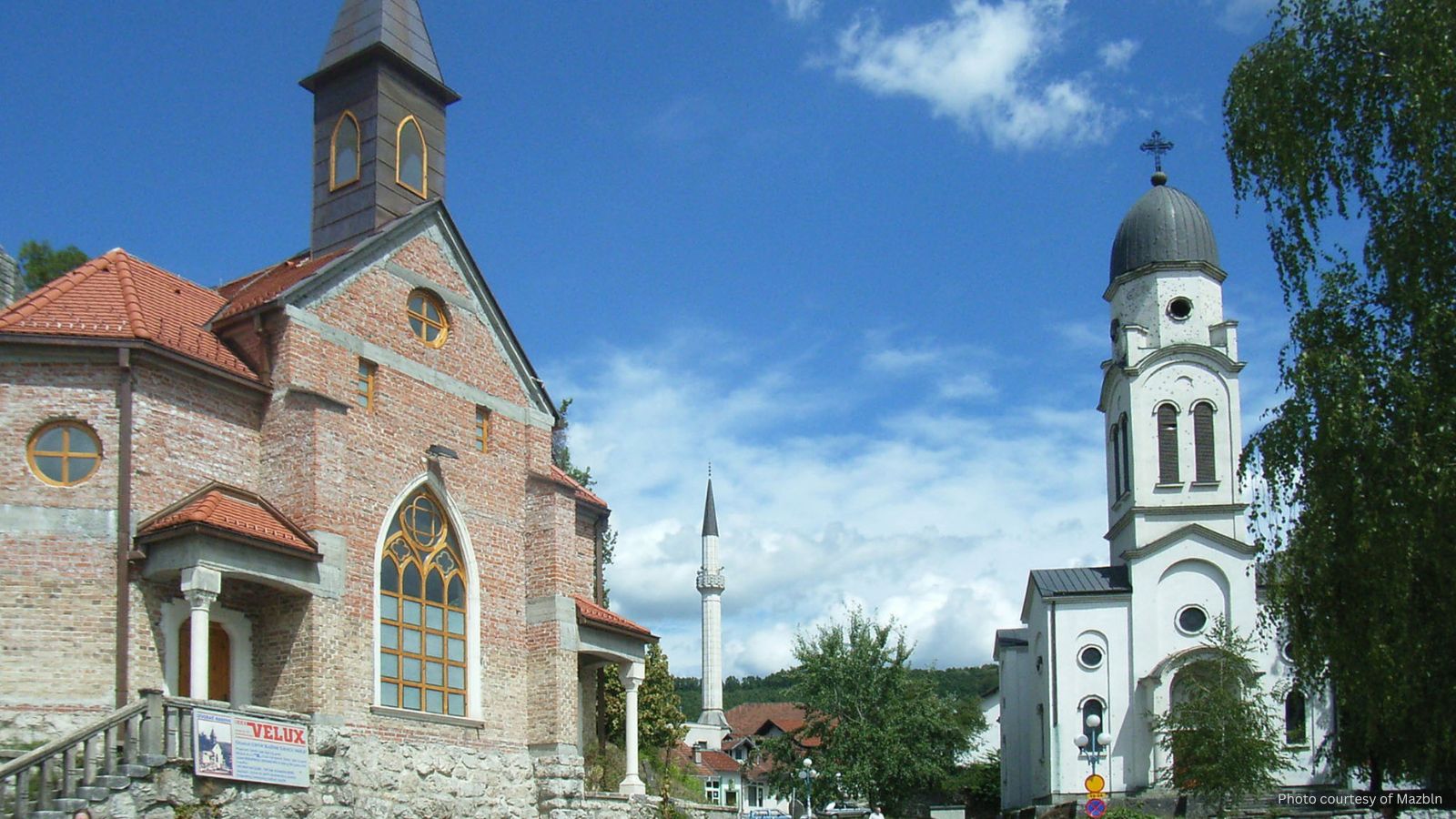
Bosnia’s skyline tells its story:
Mosque minarets
Orthodox domes
Catholic steeples
Standing within sight of one another.
But true unity is not political.
It is spiritual.
“For He Himself is our peace.” — Ephesians 2:14
From Sarajevo’s hills to rural Balkan valleys,
Christ calls Bosnia and Herzegovina into reconciliation and renewal.
🗺️ Why gregloucks.com/bosnia-and-herzegovina Matters
The Bosnia and Herzegovina page includes:
-
Federal entity structure
-
Religious composition
-
Ethnic breakdown
-
Economic sectors
-
Historical timeline
-
Reached/unreached classification
-
Evangelism strategies
-
Strategic prayer focus
Every country page in this series follows identical structural depth.
This allows:
-
Intelligent intercession
-
Structured global comparison
-
Strategic Kingdom awareness
🙏 Strategic Prayer Focus for Bosnia and Herzegovina
Pray:
-
For reconciliation across ethnic lines.
-
For Bosniak Muslims to encounter Christ.
-
For renewal within Orthodox and Catholic communities.
-
For healing of war trauma.
-
For the church to shine as a model of unity.
“After this I looked, and behold, a great multitude which no one could number, of all nations…” — Revelation 7:9
From war-scarred cities to mountain villages,
Bosnia and Herzegovina will stand before the throne.
The Lamb will receive worship from every tribe in the Balkans.
Similar Tags
Search
Subscribe
Donate



Your Statistics
For the care and safety of this prayer space, we gently record the time and location of each visit. This helps us protect sincerity while preserving anonymity.
Your Date and Time
IP Addres:
216.73.216.29
System
- OS Linux n
- PHP 8.3.30
- MySQLi 10.6.25-MariaDB-log
- Time 03:57
- Caching Disabled
- Gzip Disabled
- Users 7
- Articles 315
- Articles View Hits 6227
Website Visitors Map
About Greg Loucks
Greg Loucks is a writer, poet, filmmaker, musician, and graphic designer, as well as a creative visionary and faith-driven storyteller working at the intersection of language, meaning, and human connection. Born and raised in Phoenix, Arizona, he has lived in Cincinnati, Ohio; Hot Springs, Arkansas; Williams, Arizona; and Flagstaff, Arizona—each place shaping his perspective, resilience, and creative voice.

Address:
United States of America and Europe
Phone Numbers:
Arizona: (928) 563-GREG (4734)
Tennessee: (615) 899-GREG (4734)
Toll-Free: 888-457-GREG (4734)
Terms & Conditions
Subscribe
Report
My comments