





🖊️ Post


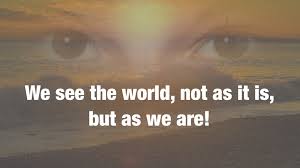
👁️ Perception, Truth, And Spiritual Sight: How We Came to Watch Different Realities — and What It Takes to See Clearly Again
Part 1: Two Movies, One World — How We Lost Shared Reality
We are no longer arguing about opinions. We are arguing about what is. Two people can watch the same event, read the same headline, hear the same words—and walk away convinced they witnessed entirely different realities. It feels less like disagreement and more like living inside parallel films projected onto the same physical world.
This fracture did not appear overnight. Shared reality depends on shared standards: what counts as evidence, which sources are trusted, how correction works, and whether truth is something discovered or something constructed. When those standards erode, coherence collapses.
Scripture warns that when truth is untethered from wisdom, confusion multiplies (Isaiah 5:20). Calling evil good and good evil is not merely moral inversion—it is perceptual breakdown. A society that cannot agree on what it sees cannot govern itself, cannot reconcile, and cannot repent together.
This is not primarily a political crisis. It is an epistemological one. And beneath that, a spiritual one.
Part 2: How Reality Fractures — Narrative, Identity, and Belonging
Humans do not merely consume information; we inhabit stories. Narratives tell us who the heroes are, who the villains are, and where we belong. When belonging becomes the highest good, truth becomes negotiable.
Modern media ecosystems reward emotional resonance over accuracy. Content that affirms identity spreads faster than content that challenges it. Over time, people do not just believe different things—they develop different instincts for trust, suspicion, and outrage.
The Bible consistently warns against forming identity apart from truth. “They exchanged the truth of God for a lie” (Romans 1:25) is not about ignorance; it is about preference. When narratives are chosen because they feel righteous rather than because they are true, perception bends to desire.
Shared reality fractures when narrative loyalty outranks fidelity to what is.
Part 3: Wisdom vs. Intelligence — Why Smart Societies Still Collapse
Intelligence solves problems. Wisdom discerns meaning.
A society can be highly educated, technologically advanced, and analytically sophisticated—and still be profoundly foolish. Scripture makes a sharp distinction here: “The fear of the Lord is the beginning of wisdom” (Proverbs 9:10). Without reverence for truth beyond ourselves, intelligence becomes a tool for rationalizing whatever we already want to believe.
History is filled with brilliant civilizations that collapsed not from stupidity but from moral and perceptual arrogance. When intelligence is severed from humility, it becomes brittle. It can explain everything except itself.
Wisdom, by contrast, begins with limits: I may be wrong. I do not see everything. I am accountable to something higher than my reasoning.
Part 4: When Cleverness Becomes Dangerous
Cleverness excels at reframing. It can make falsehoods sound compassionate and cruelty sound necessary. In media culture, cleverness is often rewarded more than truthfulness.
Ecclesiastes observes that wisdom can be corrupted when it serves power instead of truth (Ecclesiastes 10). The danger is not ignorance but overconfidence—the belief that skillful reasoning can replace moral clarity.
This is why propaganda often uses intelligent people. It does not require stupidity; it requires loyalty.
A clever society without wisdom becomes easy to steer and hard to awaken.
Part 5: Media, Power, and the Formation of Belief
Media does not simply inform; it forms. Repetition shapes plausibility. Framing shapes moral instinct. Silence shapes memory.
Every media system answers two questions, whether consciously or not: What deserves attention? And what deserves trust? Those answers shape belief long before conscious evaluation begins.
Scripture repeatedly warns about shepherds who mislead the flock, not always through lies but through distortion and omission (Ezekiel 34). Power does not need to fabricate reality if it can curate it.
Christians must understand that discernment is not only about fact‑checking claims but about recognizing formative pressure.
Part 6: Propaganda and the Illusion of Choice
Propaganda rarely announces itself. It offers curated options, not open inquiry. It tells people what questions to ask—and which ones are dangerous.
When all available narratives share the same underlying assumptions, disagreement feels free while remaining constrained. This is how societies drift without realizing they are being guided.
The biblical call to discernment includes examining foundations, not just conclusions. “Test the spirits” (1 John 4:1) is a command to evaluate sources, motives, and fruit—not merely surface claims.
Freedom of thought requires more than multiple voices; it requires the courage to step outside the frame.
Part 7: Spiritual Sight — What the Bible Means by “Seeing”
In Scripture, sight is rarely just visual. To “see” is to understand, to recognize truth, to perceive rightly. Jesus repeatedly says, “He who has eyes to see, let him see,” implying that vision can be present yet unused.
Spiritual blindness is not the absence of information but the inability to interpret reality truthfully. Pride, fear, and allegiance can all cloud sight.
The prophets describe eyes that see but do not perceive because the heart is hardened (Isaiah 6). Perception is moral before it is intellectual.
Part 8: Right and Left — A Biblical Metaphor of Orientation
Ecclesiastes 10:2 says, “A wise man’s heart inclines him to the right, but a fool’s heart to the left.” This is not a political statement but a directional metaphor.
Throughout Scripture, the “right hand” symbolizes strength, authority, and alignment with God’s order. The contrast is not about sides but about orientation—toward truth or away from it.
This metaphor invites reflection on how inner orientation shapes perception. Where the heart leans, the mind follows. Truth is not merely concluded; it is approached.
Part 9: Discernment in an Age of Propaganda
Discernment today requires slowing down in systems designed to accelerate reaction. It requires humility in cultures that reward certainty. It requires courage in environments that punish nuance.
For Christians, media literacy is not optional. It is a form of discipleship. Learning how narratives are constructed, how emotions are manipulated, and how incentives shape messaging is part of loving God with the mind.
Discernment asks not only, “Is this true?” but “What is this doing to me?”
Part 10: Media Literacy as Christian Formation
A Christian approach to media literacy includes:
-
Examining sources and incentives
-
Noticing emotional manipulation
-
Distinguishing information from formation
-
Practicing sabbath from constant consumption
-
Submitting beliefs to communal and scriptural correction
Truth flourishes in humility, patience, and love of correction. Media systems often cultivate the opposite.
Formation is happening whether we choose it or not. The question is by whom.
Part 11: Pastoral Word to the Angry and Confused
Many believers feel exhausted, angry, and disoriented. This is not failure; it is a human response to prolonged cognitive and moral stress.
Scripture invites rest, not withdrawal; clarity, not contempt. “The anger of man does not produce the righteousness of God” (James 1:20).
Discernment must be paired with gentleness. Truth without love hardens. Love without truth dissolves.
If you feel overwhelmed, begin smaller: fewer inputs, slower judgments, deeper prayer, and trusted community.
Part 12: Holding Truth Without Losing Love
Truth is not fragile, but relationships are. Christians are called to bear witness, not win wars.
Holding truth without love produces arrogance. Holding love without truth produces confusion. Christ embodies both.
In a fractured world, shared reality may not be immediately recoverable—but faithful presence still matters. Seeing clearly, speaking honestly, and loving steadfastly remain acts of resistance.
The goal is not to escape the world’s confusion, but to walk through it with eyes open, heart anchored, and hands extended.
Seeing the Same World Differently
A Skeptic’s Companion Essay
This essay is written for readers who feel talked about rather than talked to when faith, media, and politics collide. It does not assume agreement. It asks for curiosity.
A Different Starting Point
If you’re skeptical of religious explanations for political division, you’re not alone—and you’re not wrong to be cautious. Grand narratives have been misused before. They can flatten complexity, excuse bad behavior, and replace evidence with certainty.
So let’s start smaller.
Something strange is happening in modern societies. People who share the same streets, the same phones, and often the same basic facts are nonetheless experiencing radically different realities. They aren’t just disagreeing; they’re seeing different movies.
You don’t need theology to notice that.
The Puzzle of Parallel Realities
Consider a single news event. Two people watch coverage from different outlets and walk away with opposite moral conclusions—not because one is evil or stupid, but because each story emphasized different causes, victims, motives, and stakes.
Psychologists call this framing. Media scholars call it agenda-setting. Sociologists call it identity signaling.
In everyday life, we just call it exhausting.
The harder part is this: once a narrative becomes tied to identity—political, cultural, or moral—it stops being evaluated and starts being defended.
That’s not a religious claim. That’s human cognition.
Why “Just Think Critically” Isn’t Enough
Skeptics are often told that the solution is better critical thinking. That helps—but it’s incomplete.
Critical thinking tools usually assume:
-
neutral observers
-
shared definitions
-
comparable information environments
We don’t live in that world anymore.
Instead, we live inside feedback loops:
-
algorithms reward outrage
-
communities reward loyalty
-
dissent feels like betrayal
Under those conditions, intelligence doesn’t protect against error. Sometimes it sharpens it.
Highly intelligent people are often better at rationalizing what they already believe.
Why Faith Keeps Entering the Conversation
Here’s where religious language enters—not as a trump card, but as a description of depth.
When people of faith talk about “spiritual blindness,” skeptics often hear insult. What’s usually meant is something closer to this:
There are layers of perception beneath conscious reasoning that shape what we notice, ignore, trust, or fear.
Modern neuroscience agrees.
Most of our decisions are made pre-consciously—by emotional salience, pattern recognition, and meaning-making systems that operate before logic enters the room.
Religion didn’t invent that idea. It named it.
Why Beliefs Feel Non-Negotiable
Here’s the uncomfortable part for everyone.
When beliefs anchor our sense of goodness, belonging, and safety, challenges to those beliefs feel like threats to the self.
That’s why political arguments feel personal. That’s why correction feels like attack. That’s why people talk past each other.
From the inside, each side feels sane. From the outside, everyone looks unhinged.
A Modest Proposal
You don’t have to accept theological claims to consider this possibility:
Our crisis is not primarily one of information, but of formation.
What we attend to shapes us. What we repeat stabilizes. What we never question becomes sacred.
Faith traditions have wrestled with this problem for millennia. Modern media discovered it accidentally—and monetized it.
What Skepticism Still Has to Offer
Healthy skepticism remains essential:
-
it resists manipulation
-
it questions authority
-
it demands evidence
But skepticism without self-skepticism becomes dogma.
The hardest question is not “Are they wrong?” but:
“What am I unable—or unwilling—to see?”
You don’t need to convert to ask that.
You just need humility.
Appendix: Ecclesiastes 10:2, Brain Orientation, and Spiritual Formation
“The heart of the wise inclines to the right, but the heart of the fool to the left.” — Ecclesiastes 10:2
First, What This Verse Is Not Saying
This verse is frequently misunderstood.
It is not:
-
a partisan statement
-
a prediction of modern politics
-
a claim that conservatives are wise and liberals are foolish
The author of Ecclesiastes lived more than two thousand years before modern left–right politics existed.
So what is being said?
Orientation, Not Ideology
In ancient Hebrew thought, right and left were symbolic orientations.
-
Right → strength, order, favor, reliability
-
Left → weakness, instability, unpredictability
This symbolism appears throughout Scripture and other ancient cultures.
The verse is about direction of the heart, not party alignment.
The Brain-Hemisphere Metaphor (Carefully Used)
Modern neuroscience complicates simple left-brain/right-brain myths, but some broad functional tendencies remain useful as metaphors:
-
The left hemisphere specializes in categorization, language, linear logic, and control
-
The right hemisphere specializes in context, meaning, relationship, intuition, and integration
Problems arise when either dominates.
-
Pure analysis without meaning becomes brittle
-
Pure intuition without structure becomes chaotic
Wisdom integrates both.
Biblical “Seeing” as Integration
When the Bible speaks of eyes to see or hearts turned, it describes perceptual alignment—not IQ.
Spiritual formation, in this view, is the long process of:
-
widening attention
-
softening defensiveness
-
integrating truth with love
This is why Scripture so often pairs knowledge with humility, truth with mercy, and power with restraint.
Media and Disorientation
Modern media environments pull perception apart:
-
emotional right-brain cues without grounding
-
analytical left-brain data without context
The result is fragmentation.
People become fluent in arguments but poor at understanding.
What “Wisdom” Looks Like Now
In biblical terms, wisdom today might look like:
-
slowing reaction time
-
holding competing truths
-
resisting algorithmic outrage
-
refusing to reduce people to narratives
That doesn’t require religious belief—but religion offers a language and practice for it.
Final Thought
Whether you read Ecclesiastes as Scripture or literature, its insight remains:
Orientation matters.
What we habitually turn toward—fear or trust, outrage or patience, certainty or curiosity—shapes what we see.
And what we see shapes who we become.
That question belongs to skeptics and believers alike.
Sources & Further Reading (For Skeptics and Believers Alike)
I. Biblical, Theological, and Ancient Context Sources
-
The Holy Bible (ESV, NIV, NRSV)
– Ecclesiastes 10:2
– Matthew 7:13–14
– 1 Corinthians 2:14
– Proverbs (wisdom literature framework) -
Tremper Longman III, The Book of Ecclesiastes (NICOT, Eerdmans)
– Scholarly explanation of symbolic “right/left” orientation in Hebrew wisdom -
Michael V. Fox, A Time to Tear Down and a Time to Build Up: A Rereading of Ecclesiastes
– Ecclesiastes as existential wisdom, not ideological instruction -
John Walton, Ancient Near Eastern Thought and the Old Testament
– Cultural symbolism of right/left, order/chaos in ancient societies -
N.T. Wright, Scripture and the Authority of God
– How Scripture forms perception rather than delivering slogans
II. Neuroscience, Psychology, and Perception
-
Iain McGilchrist, The Master and His Emissary
– The most cited modern work on left/right hemisphere orientation, integration, and meaning
– Explicitly warns against simplistic “left-brain/right-brain” myths while defending orientation differences -
Daniel Kahneman, Thinking, Fast and Slow
– System 1 (intuitive, fast) vs. System 2 (analytical, slow) cognition
– Foundation for understanding why people “see” events differently -
Antonio Damasio, Descartes’ Error
– Emotions and pre-conscious processing precede rational thought -
Jonathan Haidt, The Righteous Mind
– Moral intuitions come first; reasoning follows
– Explains political and ideological polarization -
Lisa Feldman Barrett, How Emotions Are Made
– The brain constructs reality based on prediction, context, and meaning
III. Media Studies, Echo Chambers, and Narrative Formation
-
Walter Lippmann, Public Opinion (1922)
– Origin of the idea that people respond to “pictures in their heads,” not raw reality -
Noam Chomsky & Edward Herman, Manufacturing Consent
– Agenda-setting and framing in mass media -
Neil Postman, Amusing Ourselves to Death
– Media formats shape cognition and culture -
Shoshana Zuboff, The Age of Surveillance Capitalism
– Algorithmic feedback loops and behavioral shaping -
Eli Pariser, The Filter Bubble
– Personalized media environments and reality fragmentation -
Pew Research Center
– Studies on media trust, political polarization, and ideological sorting
IV. Sociology, Identity, and Group Psychology
-
Henri Tajfel, Social Identity Theory
– Why beliefs tied to identity resist correction -
Cass Sunstein, #Republic
– Echo chambers and group polarization -
Yuval Noah Harari, Sapiens / Homo Deus
– Shared myths, narratives, and meaning-making -
Peter Berger, The Sacred Canopy
– How societies construct and defend shared realities
V. Faith, Formation, and Spiritual Sight
-
James K.A. Smith, You Are What You Love
– Formation through habit, attention, and desire -
Dallas Willard, Renovation of the Heart
– Spiritual transformation as perceptual reordering -
Richard Foster, Celebration of Discipline
– Practices that slow, integrate, and reorient perception -
Augustine, Confessions
– Disordered loves distort vision
VI. Media Literacy & Christian Discernment
-
American Psychological Association (APA)
– Research on confirmation bias and motivated reasoning -
MIT Media Lab
– Studies on misinformation spread and emotional contagion -
Craig Groeschel, Winning the War in Your Mind
– Applied pastoral framework for thought formation -
Barna Group
– Research on Christian media consumption and worldview formation
VII. Summary Framing Source (Bridging All Sections)
-
Marshall McLuhan, The Medium Is the Message
– Media shapes perception more than content itself
Related Articles
Similar Tags
Search
Subscribe
Donate



Your Statistics
For the care and safety of this prayer space, we gently record the time and location of each visit. This helps us protect sincerity while preserving anonymity.
Your Date and Time
IP Addres:
216.73.216.29
System
- OS Linux n
- PHP 8.3.30
- MySQLi 10.6.25-MariaDB-log
- Time 07:36
- Caching Disabled
- Gzip Disabled
- Users 8
- Articles 315
- Articles View Hits 6294
Website Visitors Map

About Greg Loucks
Greg Loucks is a writer, poet, filmmaker, musician, and graphic designer, as well as a creative visionary and faith-driven storyteller working at the intersection of language, meaning, and human connection. Born and raised in Phoenix, Arizona, he has lived in Cincinnati, Ohio; Hot Springs, Arkansas; Williams, Arizona; and Flagstaff, Arizona—each place shaping his perspective, resilience, and creative voice.

Address:
United States of America and Europe
Phone Numbers:
Arizona: (928) 563-GREG (4734)
Tennessee: (615) 899-GREG (4734)
Toll-Free: 888-457-GREG (4734)

Terms & Conditions
Subscribe
Report
My comments