






🖊️ Post


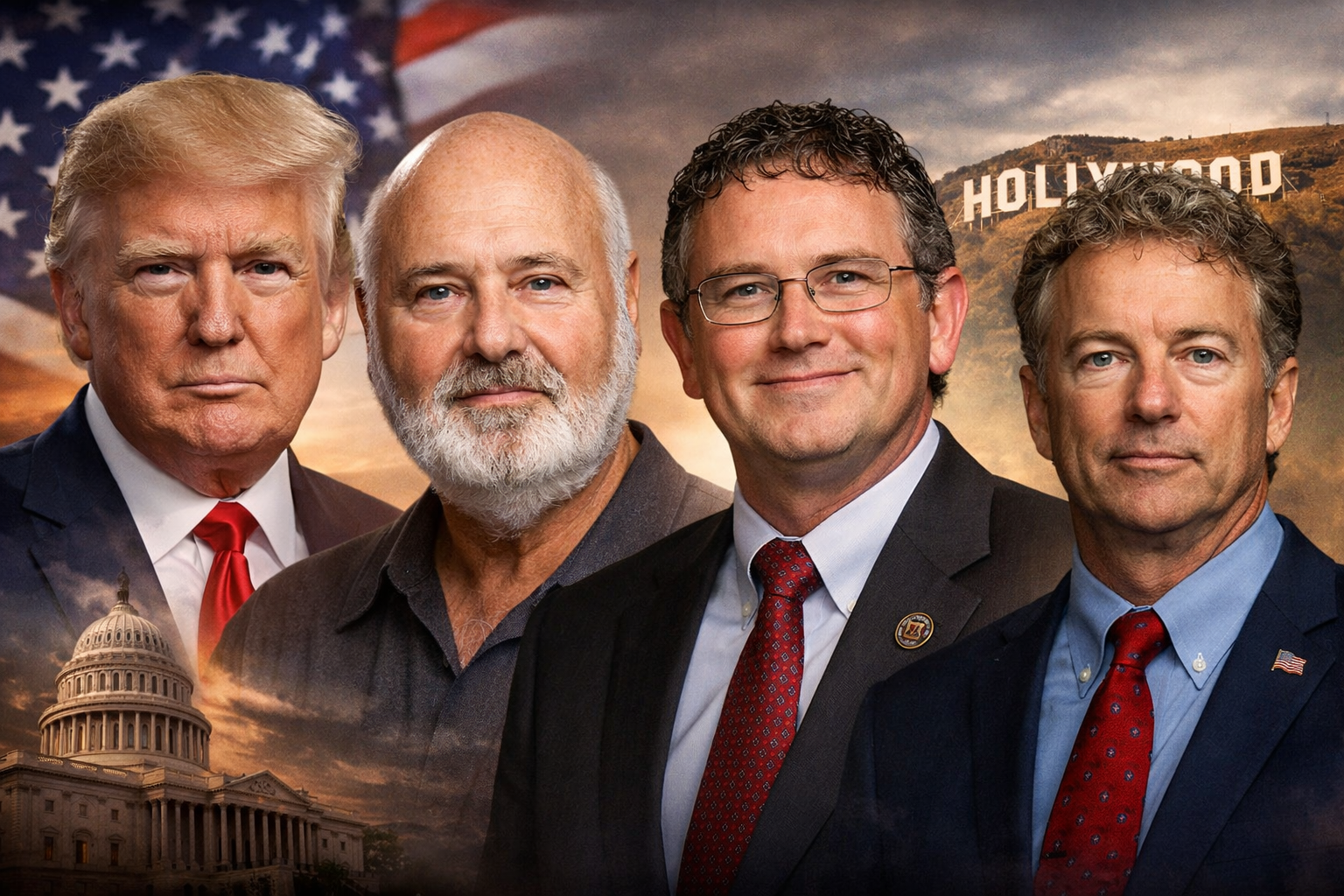
🧑 You Can Like Trump Without Liking Everything He Says or Does
Integrity Over Tribalism
Supporting a Leader Without Surrendering Your Conscience
The Problem With Modern Political Loyalty
Modern politics increasingly demands something dangerous: total loyalty.
If you support a political leader, you are often expected to defend everything they say, everything they do, and every decision they make. Question anything, and suddenly the accusations begin.
You are called disloyal.
You are labeled weak.
You are told you must secretly be siding with the opposition.
This expectation misunderstands the nature of leadership, citizenship, and principle.
A healthy political culture allows disagreement.
A healthy movement allows correction.
And responsible citizens never surrender their conscience to a politician.
“Support is not worship. Loyalty does not require silence.”
Why This Conversation Matters
Political movements rarely collapse because of outside opposition alone.
More often, they collapse when they lose the ability to correct themselves.
When loyalty becomes more important than truth, movements begin to protect leaders instead of protecting principles. When disagreement becomes taboo, accountability disappears.
The real question is not whether someone supports Donald Trump.
The real question is whether support requires surrendering independent judgment.
Support Is Not Worship
Donald Trump rose to power largely because he was willing to say things others would not.
He challenged media narratives.
He confronted globalism.
He criticized entrenched bureaucracies.
He accused powerful institutions of corruption.
For millions of Americans, Trump gave voice to frustrations that had been ignored for decades.
Entire regions of the country felt invisible to Washington. Industries collapsed while politicians spoke in abstract economic language. Cultural institutions increasingly dismissed traditional values while claiming moral authority.
Trump’s blunt and combative style cut through that atmosphere.
For many voters, he did something few politicians had done in years: he acknowledged the problem.
That mattered.
And for many Americans, it still matters.
But acknowledging real problems does not mean every tactic used to address them is wise.
Bluntness is not always the same as wisdom.
Disruption is not always the same as reform.
Trump’s political style frequently includes:
• personal attacks
• public feuds
• aggressive responses to critics
• emotional reactions in real time
Sometimes these tactics energize supporters and dominate the news cycle.
Other times they distract from policy goals, weaken alliances, or shift attention away from issues that deserve serious debate.
Recognizing that difference is not betrayal.
It is maturity.
“You can support a movement without surrendering your conscience.”
What Trump Says — and How He Says It
Trump often argues that politics is a rough arena and that anyone who criticizes him should expect criticism in return.
There is truth in that.
Politics has never been gentle. It is an arena where competing visions of society collide, reputations are challenged, and powerful interests defend themselves aggressively.
But leadership requires more than simply fighting back.
Leadership requires discernment.
It requires knowing which battles matter and which ones are distractions.
When every disagreement becomes personal, substance disappears. When legitimate policy objections are dismissed as disloyalty, accountability disappears.
Movements rarely collapse because of outside enemies.
More often, they collapse because they stop correcting themselves.
Congress and the Illusion of Change
Nowhere is this failure more visible than in Congress.
Despite years of campaign promises about fiscal responsibility and government reform, Republicans in both the House and Senate continue passing clean Continuing Resolutions (CRs).
These bills extend existing government funding levels without requiring reforms, spending reductions, or structural change.
They are frequently justified as necessary to prevent government shutdowns.
But the results are predictable.
• Wasteful programs remain untouched
• Federal spending remains historically high
• The national debt continues to expand
• Accountability is postponed yet again
What is often presented as pragmatic compromise frequently becomes political avoidance.
Instead of forcing difficult debates about priorities, Congress chooses temporary funding extensions that maintain the existing system.
This is not conservative governance.
It is maintenance of the status quo.
“If nothing changes, nothing changes.”
Business as Usual — Regardless of Party
One reason public frustration has intensified is the growing perception that both parties ultimately protect the same institutional structure.
Democrats openly advocate for expanded government programs.
Republicans frequently campaign against those programs.
But once elected, many Republican lawmakers quietly manage the same system they promised to reform.
The rhetoric changes.
The outcomes often do not.
This disconnect is why so many Americans feel betrayed.
Election after election, voters are promised meaningful fiscal reform.
Yet once in office, leaders frequently choose the path of least resistance and label it pragmatism.
Clean continuing resolutions have become one of the clearest examples of this pattern.
They represent:
• avoidance of hard decisions
• fear of confrontation
• unwillingness to force real debate about priorities
If nothing changes, nothing changes.
When Principle Becomes a Problem
Against that backdrop, a small number of lawmakers stand out—not because they are flawless, but because they are consistent.
Senator Rand Paul and Representative Thomas Massie routinely oppose clean continuing resolutions and bloated spending packages.
They demand:
• recorded votes
• constitutional process
• transparency
• genuine fiscal restraint
They do this knowing the political cost.
Opposing spending bills can isolate lawmakers from party leadership. It can threaten committee assignments. It can reduce political support.
Yet Paul and Massie continue voting against legislation they believe violates fiscal responsibility.
They stand on principle when it would be far easier—and far more comfortable—to comply.
“Integrity becomes controversial when it threatens business as usual.”
Attacking the Few Who Resist
Instead of engaging their arguments, party leadership often responds with personal criticism.
Thomas Massie has been mocked, insulted, and publicly ridiculed.
Rand Paul is frequently portrayed as an obstructionist rather than someone applying constitutional scrutiny.
Yet the core question remains unanswered:
If runaway spending is the problem, why attack the few people trying to stop it?
Fiscal responsibility is widely praised rhetorically.
But when someone actually attempts to enforce it, they become inconvenient.
Misinformation, Rhetoric, and Responsibility
Political discourse is already volatile, which makes accuracy and restraint even more important for leaders with large platforms.
It is worth stating clearly: Rob Reiner is alive.
Online rumors claiming he had died or been attacked circulated briefly on social media, but those claims were false.
Reiner has long been a vocal critic of Donald Trump, and the two have exchanged harsh words publicly.
But Trump himself escalated the rhetoric surrounding Reiner in a controversial statement, saying:
“Rob Reiner, a tortured and struggling, but once very talented movie director and comedy star… reportedly drove people crazy with his massive, unyielding case of Trump Derangement Syndrome.”
He later added:
“I wasn’t a fan of Rob Reiner at all in any way, shape or form… he became like a deranged person. I thought he was very bad for our country.”
Whether someone agrees with Reiner politically or not, mocking someone around rumors of their death crosses a line.
Leaders do not have to respect their critics.
But they do have a responsibility not to inflame misinformation.
“Truth should not be optional—even in political conflict.”
Mixed Signals From the Top
Frustration deepens when messaging becomes inconsistent.
Trump has also made controversial remarks regarding the Jeffrey Epstein scandal, suggesting Americans should move on from the issue despite the many unanswered questions surrounding it.
At one point he dismissed the controversy by saying the country should essentially “get over it.”
For many Americans, that response is deeply unsatisfying.
The Epstein case represents something larger than politics. It raises fundamental questions about whether powerful individuals are protected from accountability and whether victims will ever receive justice.
Seeking answers is not partisan.
It is moral.
The “Gold Card” Immigration Controversy
Trump has also floated a controversial immigration proposal sometimes described as a “gold card” program, where wealthy individuals could essentially buy a path to U.S. citizenship.
Critics argue that such proposals create a system where wealth determines who gets to become American, allowing rich foreigners to skip the long legal process that millions of immigrants must endure.
The idea sparked backlash from across the political spectrum.
Many asked a simple question:
If citizenship can be purchased, what does that say about the meaning of citizenship?
For immigrants who spent years navigating the legal system, the idea of wealthy elites cutting the line appears deeply unfair.
It also raises uncomfortable questions about whether American citizenship is becoming a commodity rather than a covenant.
JD Vance and the “Best People” Argument
Vice President JD Vance, speaking at Turning Point USA events, has framed immigration and national identity in terms of keeping only the “best” people in the country.
He has argued that America should prioritize retaining high-value contributors while implying that some people—even legal residents—should potentially leave if they do not meet that standard.
Critics argue that such rhetoric moves dangerously close to defining citizenship based on perceived usefulness rather than equal protection under the law.
Matt Schlapp and the Iranian Girls Controversy
Another example of inflammatory rhetoric came from Matt Schlapp, the chairman of the American Conservative Union (ACU) and the longtime organizer of the Conservative Political Action Conference (CPAC).
During a debate about a bombing incident involving a girls’ school in Iran, Schlapp responded to criticism about civilian casualties by saying:
“They’d be alive in a burqa… this is a barbaric society.”
He also argued the girls would have grown up:
“in a barbaric, unequal society behind a burqa with no ability to make career choices.”
The comments were widely criticized because they appeared to dismiss the deaths of young girls by implying their lives would have been worse if they had survived.
Whether one condemns Iran’s regime or not, dismissing the deaths of children in geopolitical arguments deeply disturbed many observers.
The Language of Political Attack
When these issues are raised, something else often happens.
Critics are not debated.
They are labeled.
The tactic resembles Rule #5 from Saul Alinsky’s Rules for Radicals, which encourages activists to ridicule and isolate opponents rather than engage their arguments.
On the political left, critics are often labeled:
“racist”
“sexist”
“bigot”
“xenophobe”
But increasingly, critics on the political right encounter their own version of this tactic.
If someone questions corruption or policy decisions involving the Israeli government, the accusation frequently becomes “antisemitism.”
Serious discussions about foreign policy, corruption, or geopolitical alliances are sometimes shut down before they even begin.
The result is the same regardless of which side uses the tactic.
Discussion stops.
Debate ends.
Tribal loyalty replaces truth.
Truth Should Never Be Optional
Demanding truth is not obsession.
It is not conspiracy.
It is not disloyalty.
A system that protects the powerful while lecturing the public about trust cannot sustain credibility.
Accountability must be applied consistently.
Selective outrage weakens movements.
Selective silence erodes trust.
Selective outrage and selective silence erode credibility faster than opposition attacks ever could.
“Selective outrage destroys credibility faster than opposition attacks.”
Standing Alone Is Biblical
Scripture consistently honors those who stand for what is right—even when they stand alone.
“You shall not follow a multitude to do evil.”
— Exodus 23:2
“Woe to those who call evil good and good evil.”
— Isaiah 5:20
“Wide is the gate and broad is the way that leads to destruction… narrow is the gate and difficult is the way which leads to life.”
— Matthew 7:13–14
Throughout Scripture, the individuals honored by God are often those who refused to follow the majority.
Daniel refused to bow before Nebuchadnezzar.
Elijah stood against the prophets of Baal.
Jeremiah spoke truth to kings who wanted silence.
John the Baptist confronted Herod.
And Jesus Himself stood alone before both religious and political authorities.
Standing alone does not automatically make someone right.
But standing on truth often results in standing alone.
The Cost of Integrity
Standing on principle often brings isolation.
It invites mockery.
It provokes anger from those who benefit from compromise.
Paul understood this reality well:
“If I were still trying to please people, I would not be a servant of Christ.”
— Galatians 1:10
Integrity is expensive.
But compromise is costlier.
Loyalty vs. Integrity
Supporting Donald Trump does not require defending every decision, excusing wasteful spending, or ignoring contradictions.
A healthy movement allows internal correction.
An unhealthy one punishes it.
You can:
• appreciate Trump’s disruption of entrenched political power
• reject endless spending and clean CRs
• defend lawmakers who stand on fiscal and constitutional principle
• demand truth and transparency from everyone, regardless of party
These positions are not contradictions.
They reinforce one another.
“Real loyalty allows correction. Blind loyalty forbids it.”
Standing Alone Is Not Failure
“Enter by the narrow gate. For the gate is wide and the way is easy that leads to destruction.”
— Matthew 7:13
The narrow path is rarely crowded.
That does not make it wrong.
If conservatism means anything at all, it must mean:
• saying no when spending is reckless
• telling the truth when lies are convenient
• honoring principle even when it costs political capital
Rand Paul and Thomas Massie are not perfect.
But they are consistent.
And consistency, in an age of performance politics, is rare.
Conclusion: Integrity Before Victory
Winning elections matters.
But how we win matters too.
“What does the Lord require of you but to do justice, love kindness, and walk humbly with your God?”
— Micah 6:8
Supporting a leader does not require surrendering your conscience.
Sometimes real support means saying:
“This is wrong.”
That is not betrayal.
That is backbone.
Final Word
A movement that cannot tolerate principled dissent will eventually collapse under its own contradictions.
The American people are not asking for perfection.
They are asking for honesty.
They are asking for leaders who will say no when saying yes would be easier, safer, and more profitable.
Unity built on denial is not unity.
It is fragility pretending to be strength.
“Let us not grow weary of doing good, for in due season we will reap, if we do not give up.”
— Galatians 6:9
Truth does not need a majority vote.
Integrity does not need permission.
Principle does not need applause.
Stand anyway.
Shareable Quotes
“Support is not worship. Loyalty does not require silence.”
“You can support a leader without surrendering your conscience.”
“Integrity becomes controversial when it threatens business as usual.”
“Selective outrage destroys credibility faster than opposition attacks.”
“Truth does not need a majority vote. Principle does not need applause.”
Related Articles
Search
Subscribe
Donate



Your Statistics
For the care and safety of this prayer space, we gently record the time and location of each visit. This helps us protect sincerity while preserving anonymity.
Your Date and Time
IP Addres:
216.73.216.29
System
- OS Linux n
- PHP 8.3.30
- MySQLi 10.6.25-MariaDB-log
- Time 19:14
- Caching Disabled
- Gzip Disabled
- Users 26
- Articles 315
- Articles View Hits 8431
Website Visitors Map

About Greg Loucks
Greg Loucks is a writer, poet, filmmaker, musician, and graphic designer, as well as a creative visionary and faith-driven storyteller working at the intersection of language, meaning, and human connection. Born and raised in Phoenix, Arizona, he has lived in Cincinnati, Ohio; Hot Springs, Arkansas; Williams, Arizona; and Flagstaff, Arizona—each place shaping his perspective, resilience, and creative voice.

Address:
United States of America and Europe
Phone Numbers:
Arizona: (928) 563-GREG (4734)
Tennessee: (615) 899-GREG (4734)
Toll-Free: 888-457-GREG (4734)

Terms & Conditions
Subscribe
Report
My comments