


🖊️ Post


☪︎ The Arab Spring Part 6 🇾🇪 Yemen: The Revolution That Became a Regional War


4
The Yemeni uprising of 2011 began as part of the wider Arab Spring, with mass protests calling for political reform and the end of long-standing authoritarian rule.
However, unlike Tunisia—where the revolution led to political transition—or Egypt—where leadership changed but the state remained intact—Yemen’s uprising spiraled into one of the most complex and devastating conflicts in the world.
The protests ultimately forced the resignation of President Ali Abdullah Saleh, who had ruled Yemen for more than three decades.
Yet instead of stabilizing the country, the revolution triggered a chain of events that led to civil war, regional intervention, and a humanitarian catastrophe.
For supporters, the uprising represented a popular demand for dignity, economic opportunity, and political reform.
For critics, it demonstrated how weak institutions, internal divisions, and external involvement can transform a revolution into prolonged conflict.
Yemen’s experience became one of the most tragic outcomes of the Arab Spring.
Yemen Before the Revolution
To understand the uprising, it is important to examine Yemen’s political and social structure before 2011.
Ali Abdullah Saleh had ruled North Yemen since 1978 and became president of a unified Yemen in 1990.
His leadership was characterized by a system often described as “balancing competing interests” between:
• Tribal groups
• Political factions
• Military leaders
• Regional power centers
While this approach helped Saleh maintain power, it also created a fragile political system dependent on personal alliances.
Yemen faced severe structural challenges, including:
• Widespread poverty
• High unemployment
• Limited access to clean water
• Rapid population growth
• Weak government institutions
In addition, Yemen was already dealing with internal conflicts, including:
• A rebellion by the Houthi movement in the north
• Separatist tensions in southern Yemen
These underlying tensions made the country particularly vulnerable to instability.
The Arab Spring Reaches Yemen


4
Inspired by uprisings in Tunisia and Egypt, protests began in Yemen in early 2011.
Demonstrators gathered in cities including:
• Sana’a (the capital)
• Taiz
• Aden
The central hub of the protest movement became Change Square in Sana’a, where thousands of protesters established a permanent encampment.
Protesters demanded:
• The resignation of President Saleh
• Political reforms
• An end to corruption
• Economic opportunities
The movement attracted a wide range of participants:
• Students
• Tribal leaders
• Activists
• Religious figures
Initially, the protests were largely peaceful.
However, tensions quickly escalated.
Violence and Political Crisis


4
As the demonstrations grew, the Yemeni government responded with increasing force.
Security forces used:
• Tear gas
• Live ammunition
• Mass arrests
One of the most significant turning points occurred in March 2011, when security forces opened fire on protesters in Sana’a, killing dozens.
The event shocked the country and triggered widespread outrage.
Following the crackdown:
• Several military units defected to support the protesters
• Tribal leaders withdrew support from the government
• Political divisions deepened
Yemen was no longer just facing protests—it was entering a full political crisis.
Saleh’s Exit from Power


4
After months of protests, negotiations, and violence, international actors became involved in seeking a political solution.
The Gulf Cooperation Council (GCC) proposed a transition plan.
Under the agreement:
• President Saleh would step down
• Power would transfer to his vice president, Abd-Rabbu Mansour Hadi
• A political transition process would begin
In 2012, Saleh officially resigned.
Elections were held, and Hadi became president.
At the time, many hoped Yemen was beginning a peaceful transition toward reform.
However, the underlying problems that had fueled the uprising remained unresolved.
The Collapse of the Transition

4
The post-revolution transition quickly began to unravel.
Political divisions deepened, and the central government struggled to maintain control.
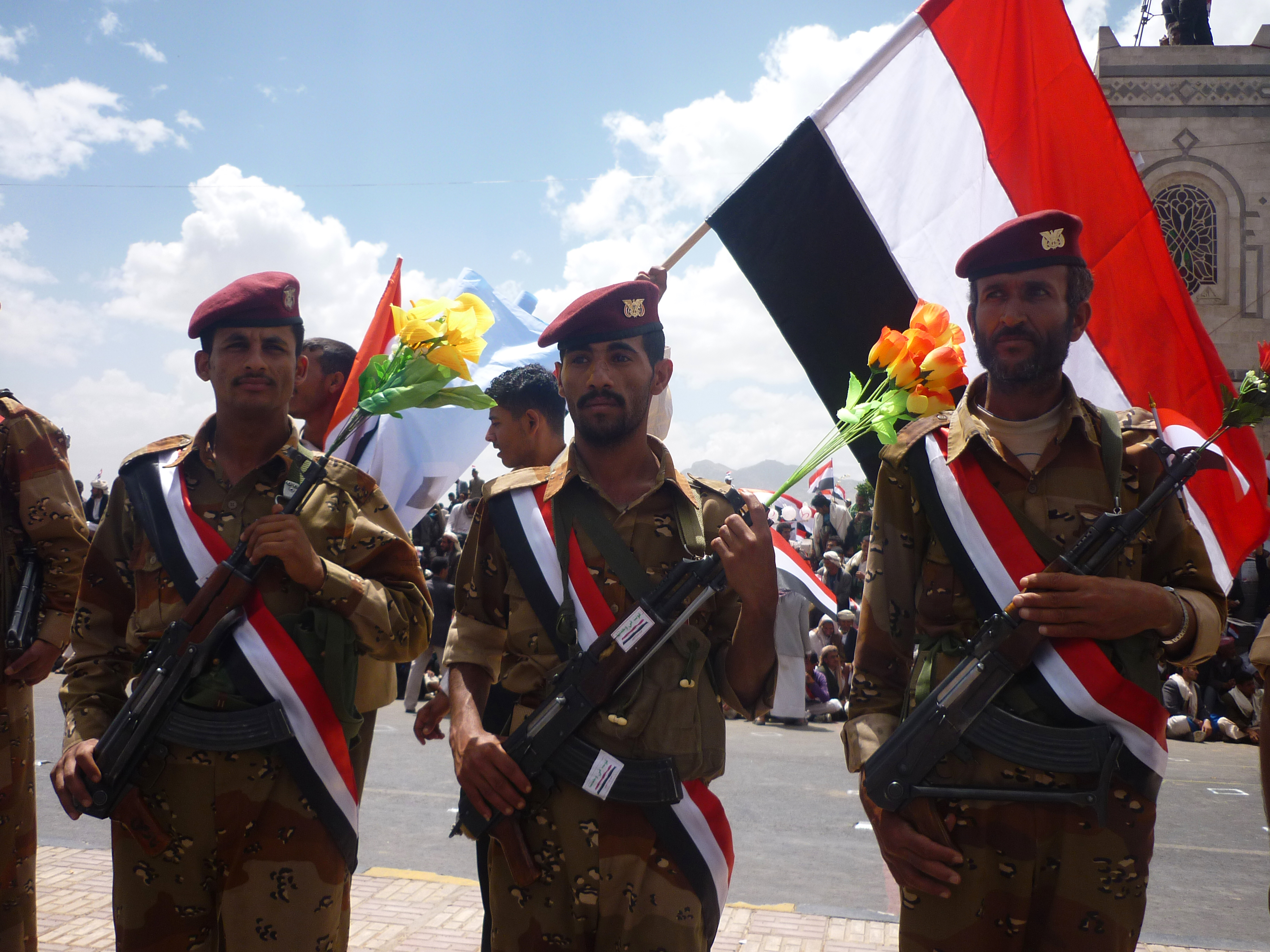
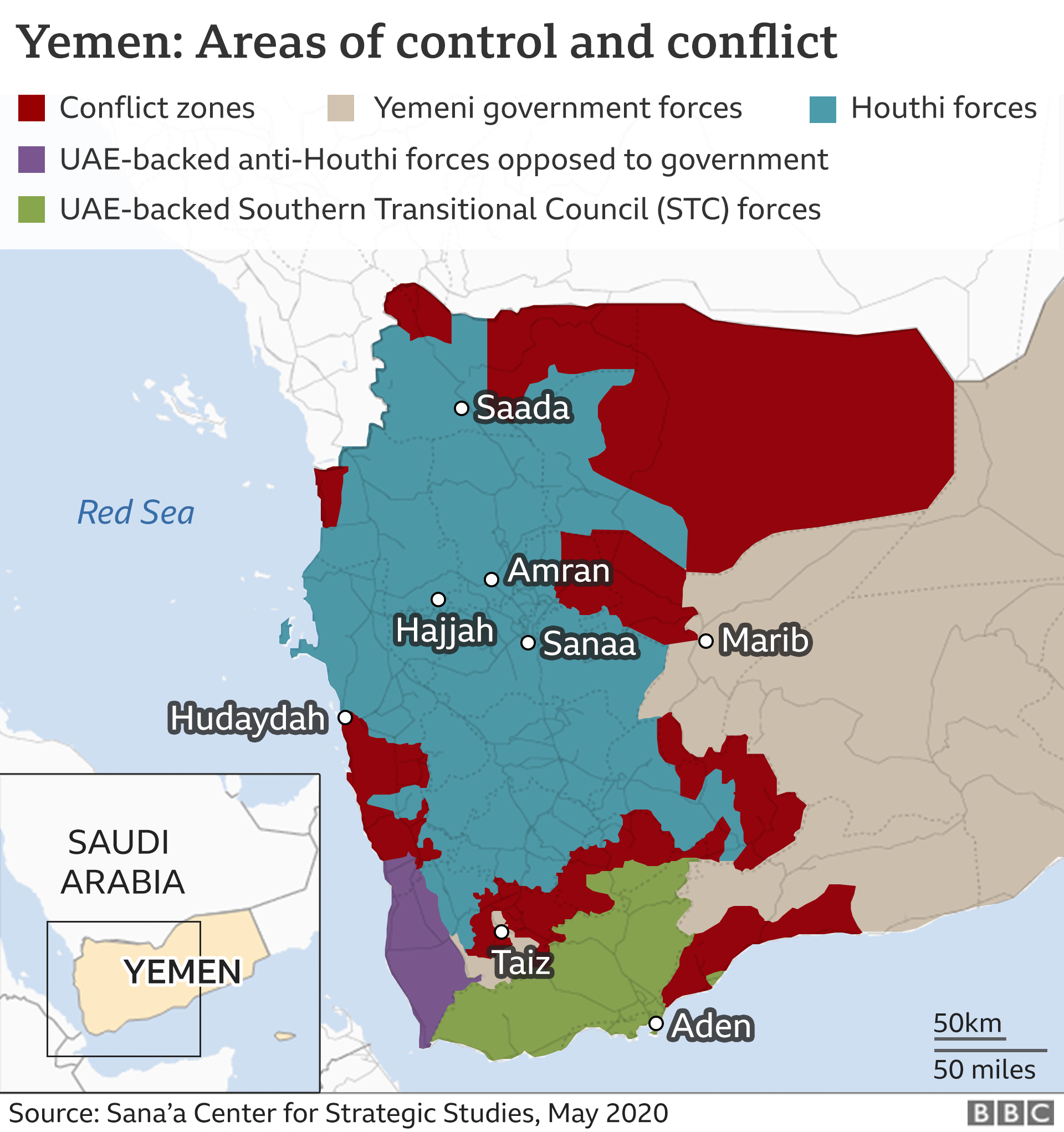
In 2014, the Houthi movement, which had been active in northern Yemen for years, advanced southward and seized control of the capital Sana’a.
The government collapsed.
President Hadi fled the capital and later left the country.
Yemen was once again descending into chaos—this time on an even larger scale.
Regional Intervention and War


4
In 2015, a coalition led by Saudi Arabia launched a military intervention in Yemen.
The coalition aimed to:
• Restore the internationally recognized government
• Push back Houthi forces
The conflict quickly became a regional proxy war, with:
• Saudi Arabia supporting government forces
• Iran accused of supporting the Houthis
Airstrikes, ground fighting, and blockades devastated large parts of the country.
The war continues to this day, with periodic ceasefires but no lasting political resolution.
The Humanitarian Crisis


4
The conflict in Yemen has created one of the worst humanitarian crises in the world.
Millions of Yemenis face:
• Food shortages and famine
• Limited access to clean water
• Collapsed healthcare systems
• Displacement from their homes
International organizations have described Yemen as a catastrophic humanitarian emergency.
The crisis has affected millions of civilians, particularly children.
Why Yemen Matters
The Yemeni uprising demonstrates how revolutions can produce dramatically different outcomes depending on the strength of state institutions and the presence of internal divisions.
Several key lessons emerge from Yemen’s experience:
• Weak political systems can collapse after leadership change
• Internal conflicts can resurface and intensify
• External intervention can escalate domestic crises into regional wars
Unlike Tunisia—where the Arab Spring led to reform—Yemen illustrates how revolutions can lead to state collapse and prolonged conflict.
Yemen Today
Today, Yemen remains deeply divided.
Multiple factions continue to compete for control of the country.
Efforts at peace negotiations have made limited progress.
The country’s future remains uncertain.
The events of 2011 marked a turning point, but instead of bringing stability, they opened the door to a decade of conflict, suffering, and geopolitical struggle.
Yemen and the Arab Spring Legacy
Yemen’s story is one of the most sobering examples of the Arab Spring.
What began as peaceful protests calling for reform became a multi-layered conflict involving domestic factions, regional powers, and global interests.
It stands as a powerful reminder that revolutions can unleash forces that are difficult to control—especially in countries already facing deep structural challenges.
Similar Tags
Search
Subscribe
Donate



Your Statistics
For the care and safety of this prayer space, we gently record the time and location of each visit. This helps us protect sincerity while preserving anonymity.
Your Date and Time
IP Addres:
216.73.216.29
System
- OS Linux n
- PHP 8.3.30
- MySQLi 10.6.25-MariaDB-log
- Time 07:52
- Caching Disabled
- Gzip Disabled
- Users 39
- Articles 315
- Articles View Hits 9652
Website Visitors Map
About Greg Loucks
Greg Loucks is a writer, poet, filmmaker, musician, and graphic designer, as well as a creative visionary and faith-driven storyteller working at the intersection of language, meaning, and human connection. Born and raised in Phoenix, Arizona, he has lived in Cincinnati, Ohio; Hot Springs, Arkansas; Williams, Arizona; and Flagstaff, Arizona—each place shaping his perspective, resilience, and creative voice.

Address:
United States of America and Europe
Phone Numbers:
Arizona: (928) 563-GREG (4734)
Tennessee: (615) 899-GREG (4734)
Toll-Free: 888-457-GREG (4734)

Terms & Conditions
Subscribe
Report
My comments