


🖊️ Post


🌍🎨Color Revolution Series Part 10 🇷🇺 Russia: The Unsuccessful Protest Movements and the Limits of a Color Revolution


4
Russia has experienced several large protest movements in the 21st century that some observers have described as attempted Color Revolutions.
However, unlike events in countries such as Georgia, Ukraine, or Armenia, these protest movements did not result in the overthrow of the government or a dramatic political transition.
Instead, they revealed the limits of protest movements in a political system where the state maintains strong control over institutions, security forces, and media networks.
The most significant of these movements occurred during the 2011–2012 protests, sometimes called the “White Ribbon Movement.”
Later waves of demonstrations, including protests in 2017, 2019, and 2021, also challenged the Russian government but ultimately failed to produce a change in leadership.
For supporters of the protests, these movements represented citizen demands for democratic reform and fair elections.
For critics within Russia’s leadership, they were viewed as Western-influenced attempts to destabilize the country through Color Revolution-style tactics.
The events highlight how modern protest movements interact with powerful state institutions, media control, and geopolitical narratives.
Russia’s Political System Under Vladimir Putin
To understand why Color Revolution-style movements struggled in Russia, it is necessary to examine the political system that developed after the collapse of the Soviet Union.
During the 1990s, Russia experienced a turbulent transition from communism to a market economy.
The decade was marked by:
• Economic collapse
• Political instability
• The rise of powerful oligarchs
• Regional conflicts such as the Chechen wars
In 2000, Vladimir Putin became president and began consolidating power within the Russian political system.
Over the following years, the government strengthened control over several key institutions:
• National television networks
• Security services
• Major industries
• Political parties
Supporters of Putin argued that his leadership restored stability and national strength after the chaotic 1990s.
Critics argued that Russia was evolving into a highly centralized political system with limited space for opposition movements.
These tensions would become more visible during the elections of 2011.
The 2011 Parliamentary Elections
The immediate trigger for the large protest movement came during the December 2011 parliamentary elections.
The ruling party, United Russia, won a majority of seats in parliament.
However, many opposition groups and independent observers accused the government of widespread election fraud.
Videos and reports of alleged irregularities circulated rapidly on the internet.
Anger spread quickly among politically active citizens, particularly in major cities such as Moscow and Saint Petersburg.
Soon, thousands of people began gathering in the streets to protest the election results.
These demonstrations became the largest protest movement in Russia since the collapse of the Soviet Union.
The White Ribbon Movement


4
The protest movement soon adopted the white ribbon as its symbol.
The ribbon represented the movement’s call for clean elections and political transparency.
Large demonstrations took place in Bolotnaya Square and other areas of Moscow, where crowds of tens of thousands gathered to protest.
Participants included:
• Students
• Journalists
• Professionals
• Artists
• Opposition politicians
Protesters carried banners calling for:
• New elections
• Political reforms
• Greater government accountability
The demonstrations were largely peaceful and resembled many of the civic protest movements seen in earlier Color Revolutions.
However, the Russian government interpreted the protests very differently.
Officials warned that foreign actors might be attempting to provoke a Color Revolution-style uprising similar to those that had occurred in other post-Soviet states.
Social Media and the Digital Protest Network

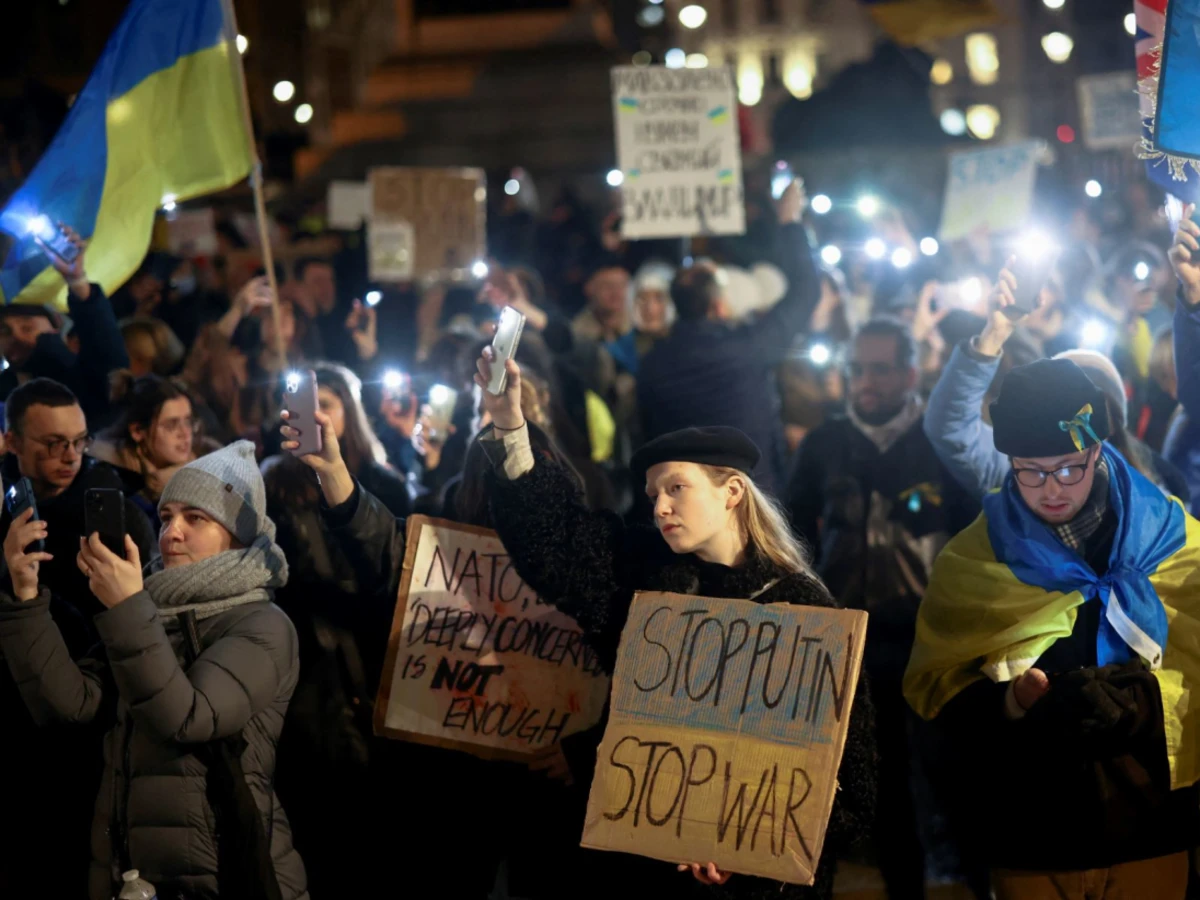

4
Like many modern protest movements, the Russian demonstrations relied heavily on digital communication networks.
Social media platforms played an important role in spreading information about alleged election fraud and organizing demonstrations.
Activists used platforms such as:
• Twitter
• Facebook
• LiveJournal
• YouTube
These platforms allowed protesters to share videos, photographs, and eyewitness reports from demonstrations.
Bloggers and independent journalists became influential voices within the movement.
Some of the most prominent opposition figures also used social media to communicate directly with supporters.
The internet therefore became a central arena for political debate and activism.
However, the government also began developing strategies to monitor and regulate digital communication spaces, recognizing their growing influence on political mobilization.
Opposition Figures and Political Leadership
Several opposition leaders became prominent during the protest movement.
One of the most visible figures was Alexei Navalny, an anti-corruption activist who gained popularity through online investigations into government corruption.
Navalny and other opposition figures helped mobilize protest supporters and attract international attention.
However, the Russian opposition remained fragmented, with multiple political factions representing different ideological perspectives.
Some activists supported liberal democratic reforms, while others represented nationalist or socialist viewpoints.
This lack of unity made it difficult for the opposition movement to develop a single political strategy capable of challenging the ruling government.
The Government Response


4
The Russian government responded to the protests with a combination of security measures and political reforms.
Authorities allowed some demonstrations to occur but also deployed police forces to control large gatherings.
Several protest leaders and participants were arrested.
New laws were introduced that increased penalties for unauthorized demonstrations.
At the same time, the government pursued policies aimed at strengthening control over political organizations and foreign-funded NGOs.
Officials argued that such measures were necessary to protect Russia from foreign interference.
Critics argued that the policies restricted political freedoms and limited opposition activity.
NGOs, Civil Society, and the Foreign Influence Debate
The protests also intensified debate within Russia about the role of foreign-funded civil society organizations.
Some organizations promoting democratic governance and civil society development had operated in Russia for many years.
Institutions involved in such programs internationally include organizations such as:
• The Open Society Foundations, associated with George Soros
• The National Endowment for Democracy (NED)
• The National Democratic Institute (NDI)
• The International Republican Institute (IRI)
Russian authorities expressed concern that some NGOs might serve as channels for external political influence.
In response, the government introduced laws requiring certain foreign-funded organizations to register as “foreign agents.”
These measures significantly changed the environment for civil society activism within the country.
Why the Protest Movement Failed
The Russian protest movement ultimately did not produce a political transition similar to earlier Color Revolutions.
Several factors contributed to this outcome:
Strong State Institutions
The Russian government maintained strong control over the security services, political institutions, and key media outlets.
Fragmented Opposition
Opposition groups lacked unified leadership and a shared political program.
Public Opinion Divisions
While many citizens supported the protests, others remained loyal to the government or feared instability similar to the chaotic 1990s.
Geopolitical Narratives
Government messaging framed the protests as potential foreign-backed attempts to destabilize Russia.
These factors limited the ability of the protest movement to gain enough momentum to challenge the political system.
Later Protest Waves
Although the 2011–2012 demonstrations gradually faded, additional protest movements emerged in later years.
These included:
• 2017 anti-corruption protests organized by opposition activists
• 2019 protests in Moscow over local election candidates
• 2021 demonstrations following the arrest of opposition figures
Each wave reflected continuing political tensions within Russian society.
However, none of these movements succeeded in producing major changes in national leadership.
Why the Russian Case Matters
The Russian protests highlight an important dimension of the study of Color Revolutions.
They show that large protest movements do not always succeed in producing political transformation.
In political systems where governments maintain strong control over institutions and security forces, protest movements face significant challenges.
Russia therefore represents an example of an attempted Color Revolution that did not succeed.
Russia Today
Today, Russia remains under the leadership of Vladimir Putin, who has served as president or prime minister since 2000.
The political system continues to emphasize strong centralized authority and national stability.
At the same time, debates about political reform, corruption, and civil liberties continue within Russian society.
The protests of the 2010s remain an important chapter in Russia’s modern political history.
They revealed the growing role of digital communication networks, civil society activism, and information narratives in shaping political movements in the 21st century.
Similar Tags
Search
Subscribe
Donate



Your Statistics
For the care and safety of this prayer space, we gently record the time and location of each visit. This helps us protect sincerity while preserving anonymity.
Your Date and Time
IP Addres:
216.73.216.11
System
- OS Linux n
- PHP 8.3.30
- MySQLi 10.6.25-MariaDB-log
- Time 10:19
- Caching Disabled
- Gzip Disabled
- Users 40
- Articles 315
- Articles View Hits 9672
Website Visitors Map
About Greg Loucks
Greg Loucks is a writer, poet, filmmaker, musician, and graphic designer, as well as a creative visionary and faith-driven storyteller working at the intersection of language, meaning, and human connection. Born and raised in Phoenix, Arizona, he has lived in Cincinnati, Ohio; Hot Springs, Arkansas; Williams, Arizona; and Flagstaff, Arizona—each place shaping his perspective, resilience, and creative voice.

Address:
United States of America and Europe
Phone Numbers:
Arizona: (928) 563-GREG (4734)
Tennessee: (615) 899-GREG (4734)
Toll-Free: 888-457-GREG (4734)
Terms & Conditions
Subscribe
Report
My comments