


🖊️ Post


Cultural Survival, 🇮🇱 Israel: The Return After Two Millennia
A Series on Cultural Survival


4
Throughout history, nations have risen and fallen. Some disappeared for generations before re-emerging. Others were absorbed into empires and gradually lost their identity.
But one story stands apart.
The story of Israel is one of the most unique examples of cultural survival in human history.
For nearly 2,000 years, the Jewish people lived without a sovereign state in their ancestral homeland.
They were scattered across continents, lived under countless governments, spoke different languages, and faced repeated persecution.
Yet they did not lose their identity.
They preserved it.
Through faith, scripture, tradition, and memory, the Jewish people maintained a continuous cultural and spiritual identity across centuries of exile.
Then, in the 20th century, something extraordinary happened.
The nation returned.
Ancient Roots: A People and a Promise


4
The origins of Israel trace back thousands of years to the ancient Near East.
The Hebrew Bible describes the formation of a people through covenant, beginning with figures such as
Abraham,
Isaac, and
Jacob.
Their descendants became the people of Israel.
Later, under leaders like
King David and
King Solomon,
Israel developed into a kingdom centered in Jerusalem.
The construction of the Temple in Jerusalem became a central focus of religious life.
Psalm 137:5
“If I forget you, Jerusalem, may my right hand forget its skill.”
From the beginning, identity was tied not only to land, but to covenant, faith, and memory.
Exile and Dispersion


4
The kingdoms of Israel and Judah eventually faced conquest.
The Babylonian Exile marked one of the first major dispersions.
Later, in 70 AD, the Destruction of the Second Temple by the Roman Empire led to widespread displacement.
Over time, Jewish communities spread across:
-
the Middle East
-
Europe
-
North Africa
-
and eventually the Americas
This dispersion became known as the diaspora.
Despite geographic separation, Jewish identity remained connected through shared faith and tradition.
Deuteronomy 30:3
“Then the Lord your God will restore your fortunes and have compassion on you and gather you again from all the nations where he scattered you.”
Survival Through Faith and Law


4
Without a state, Jewish life centered around religion, law, and community.
The study of the Torah and other religious writings became central to daily life.
Practices such as:
-
observing the Sabbath (Shabbat)
-
celebrating festivals like Passover
-
maintaining dietary laws
-
studying scripture
helped preserve identity across generations.
Synagogues became centers of community life wherever Jewish populations lived.
Joshua 1:8
“Keep this Book of the Law always on your lips; meditate on it day and night.”
Faith became not just belief—but a complete way of life that sustained identity across centuries.
Persecution and Perseverance


4
Throughout history, Jewish communities often faced persecution.
This included:
-
expulsions from various European countries
-
restrictions on where Jews could live or work
-
violence and discrimination
One of the darkest chapters occurred during the Holocaust, in which six million Jews were killed by Nazi Germany.
Despite immense suffering, Jewish communities continued to preserve their identity.
Psalm 121:7–8
“The Lord will keep you from all harm—he will watch over your life.”
The ability to maintain identity through persecution remains one of the most remarkable aspects of Jewish history.
The Return to a Homeland

4
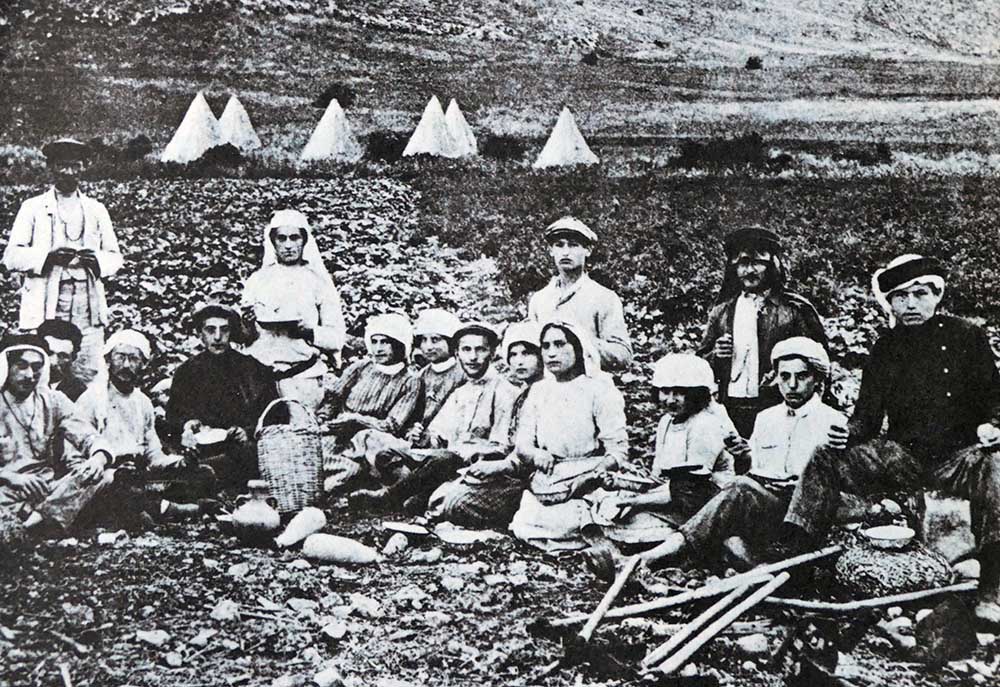
In the late 19th and early 20th centuries, a movement emerged advocating for a return to the ancestral homeland.
This movement became known as Zionism.
Jewish communities began to migrate to the region historically associated with ancient Israel.
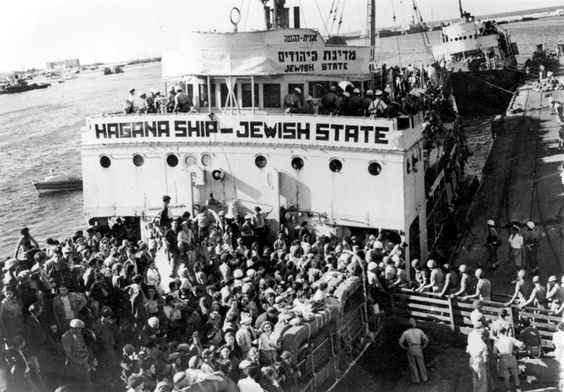
In 1948, the modern state of Israel was established.
For many, this marked the fulfillment of a long-held hope.
After nearly two millennia, a nation had returned.
Isaiah 66:8
“Can a country be born in a day or a nation be brought forth in a moment?”
Language Revived: Hebrew Returns


4
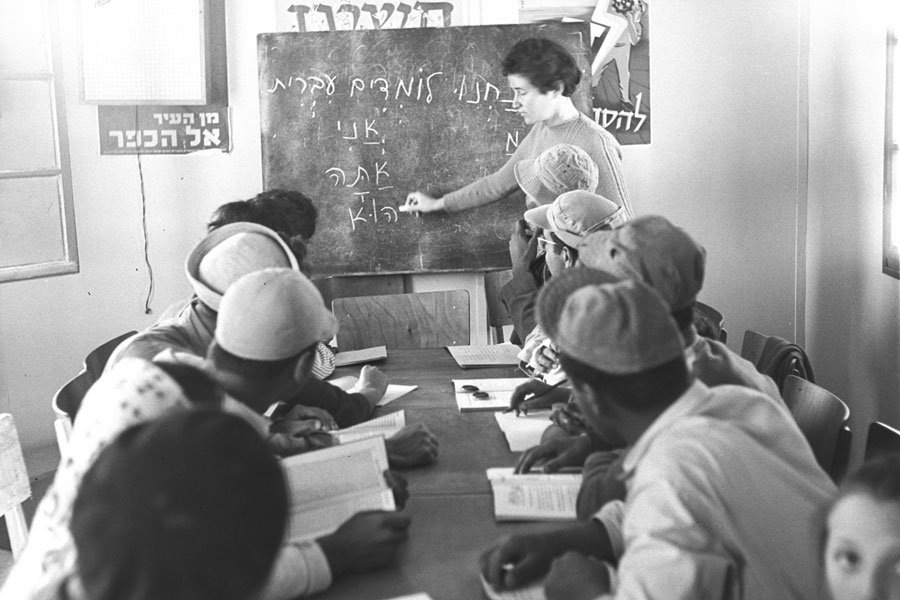
One of the most remarkable aspects of Israel’s story is the revival of the Hebrew language.
For centuries, Hebrew was primarily used in religious contexts.
In the modern era, it was revived as a spoken language, largely through the efforts of figures like
Eliezer Ben-Yehuda.
Today, Hebrew is a living, spoken language used in daily life.
This revival represents one of the clearest examples of cultural restoration in history.
Israel Today: Identity and Continuity


4
Modern Israel is a diverse society shaped by people from many regions of the world.
Despite this diversity, shared cultural elements continue to unify the nation:
-
Hebrew language
-
religious traditions
-
historical memory
-
national identity rooted in ancient history
Israel represents both continuity and change—a modern state connected to ancient traditions.
Ministry Reflection: Lessons from Israel
The story of Israel offers profound spiritual insights.
Identity Rooted in Faith Endures
Faith and scripture preserved identity across centuries without a state.
Memory Sustains Generations
Shared history and sacred texts carried identity through exile.
Restoration Is Possible
Even after long periods of separation, renewal can occur.
Hebrews 11:1
“Faith is confidence in what we hope for and assurance about what we do not see.”
Prayer Points
Prayer for Israel
Pray for peace, wisdom, and stability.
Prayer for Unity
Pray for unity among diverse communities.
Prayer for Peace in the Region
Pray for reconciliation and lasting peace.
Prayer for Faith and Understanding
Pray for deeper understanding among peoples and nations.
Psalm 122:6
“Pray for the peace of Jerusalem: ‘May those who love you be secure.’”
The Deeper Lesson
The story of Israel demonstrates that a nation is more than geography.
A nation can exist through:
-
faith
-
tradition
-
language
-
memory
Even in exile, identity can survive.
And sometimes, against all odds, it can return.
Coming Next in This Series
Part 6 — Finland: Language, Identity, and Survival Between Empires
Finland offers a different kind of story—one of cultural survival between powerful neighbors while building a strong national identity.
Its story reveals how language and education can shape a nation’s future.
Similar Tags
Search
Subscribe
Donate



Your Statistics
For the care and safety of this prayer space, we gently record the time and location of each visit. This helps us protect sincerity while preserving anonymity.
Your Date and Time
IP Addres:
216.73.216.29
System
- OS Linux n
- PHP 8.3.30
- MySQLi 10.6.25-MariaDB-log
- Time 08:02
- Caching Disabled
- Gzip Disabled
- Users 8
- Articles 315
- Articles View Hits 6298
Website Visitors Map
About Greg Loucks
Greg Loucks is a writer, poet, filmmaker, musician, and graphic designer, as well as a creative visionary and faith-driven storyteller working at the intersection of language, meaning, and human connection. Born and raised in Phoenix, Arizona, he has lived in Cincinnati, Ohio; Hot Springs, Arkansas; Williams, Arizona; and Flagstaff, Arizona—each place shaping his perspective, resilience, and creative voice.

Address:
United States of America and Europe
Phone Numbers:
Arizona: (928) 563-GREG (4734)
Tennessee: (615) 899-GREG (4734)
Toll-Free: 888-457-GREG (4734)

Terms & Conditions
Subscribe
Report
My comments