


🖊️ Post


Cultural Survival, 🇦🇿 Azerbaijan: Identity at the Crossroads of Civilizations
A Series on Cultural Survival


4
Throughout history, some nations survived through isolation. Others endured through faith or language.
But the story of Azerbaijan is one of identity preserved at a crossroads of empires, cultures, and religions.
Situated between Europe and Asia along the Caspian Sea, Azerbaijan has long been influenced by powerful neighboring civilizations.
Persian, Turkic, Russian, and Islamic influences all shaped its history.
Yet Azerbaijan did not lose itself.
Its identity adapted—but remained distinct.
The story of Azerbaijan is one of cultural fusion without erasure.
Ancient Roots and Early Civilizations


4
The lands of modern Azerbaijan have been inhabited since ancient times.
One early state in the region was Caucasian Albania, a historical kingdom that existed in antiquity.
The region became a meeting point for:
-
trade routes between East and West
-
cultural exchange between civilizations
-
religious development, including early forms of Zoroastrianism
The famous fire temples of Azerbaijan reflect this ancient spiritual heritage.
Deuteronomy 32:7
“Remember the days of old; consider the generations long past.”
A Land of Many Influences


4
Over centuries, Azerbaijan came under the influence of various empires, including:
-
Persian Empire
-
Turkic dynasties such as the Seljuks
-
later regional powers
Islam became a major influence, shaping culture, traditions, and identity.
Despite external rule, local identity continued to develop.
Language and Cultural Identity


4
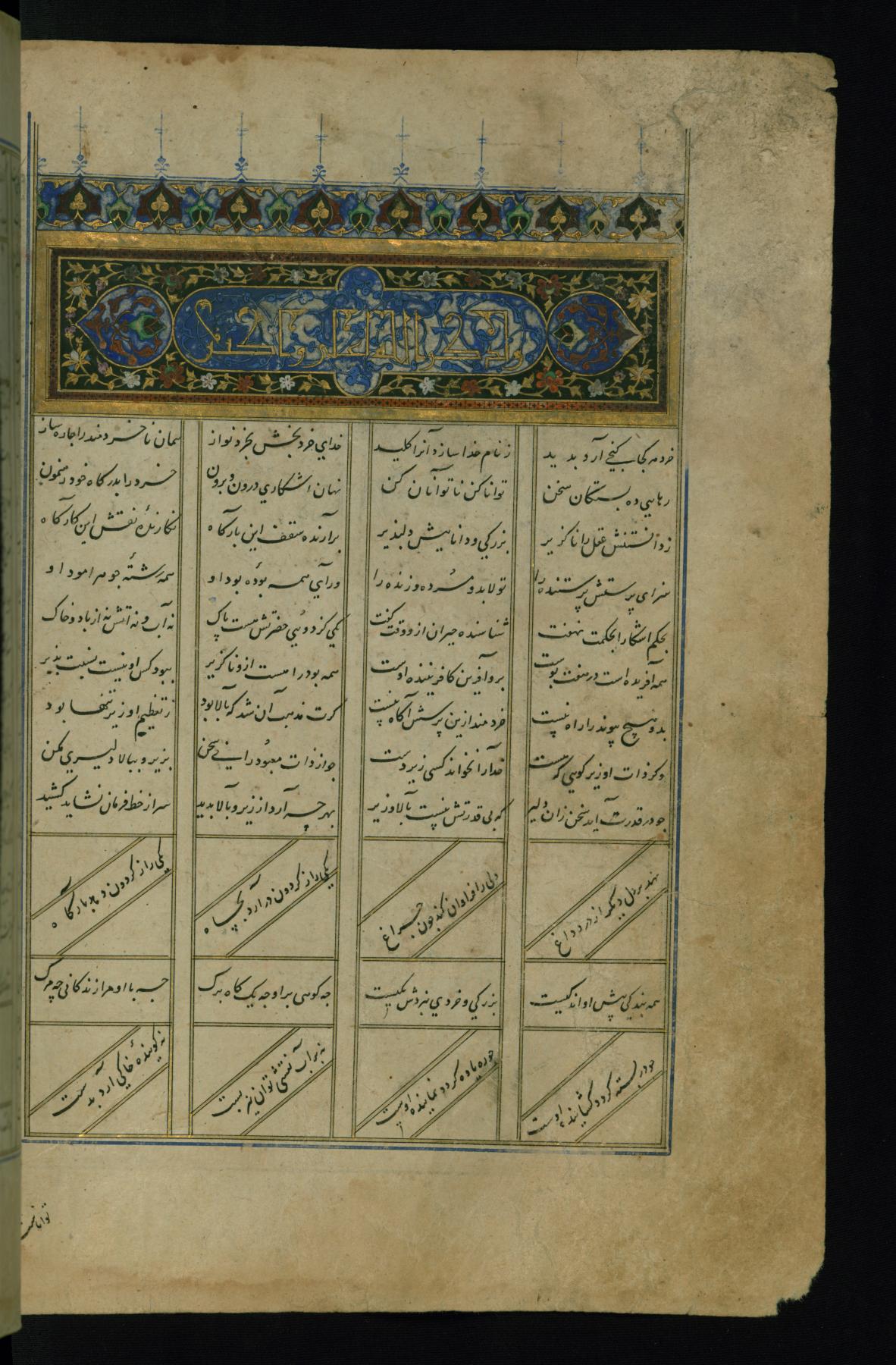
The Azerbaijani language, a Turkic language, became a central part of national identity.
Cultural traditions flourished through:
-
poetry (notably figures like Nizami Ganjavi)
-
music, especially mugham
-
carpet weaving and craftsmanship
These artistic expressions helped preserve identity across generations.
Proverbs 22:6
“Train up a child in the way he should go; even when he is old he will not depart from it.”
Between Russia and Persia


4
In the 19th century, Azerbaijan became divided between the Russian Empire and Persia.
Northern Azerbaijan, including the city of Baku, came under Russian control.
This period brought:
-
industrial development (especially oil in Baku)
-
new political structures
-
cultural interaction with Europe
Yet Azerbaijani identity remained intact.
A Brief Independence


4
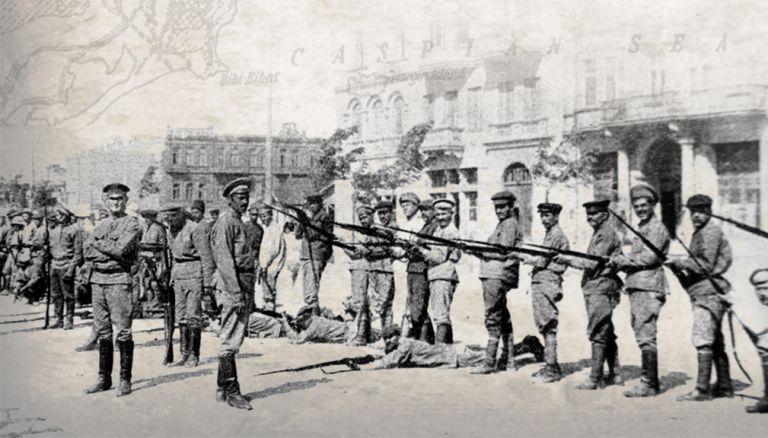
In 1918, Azerbaijan declared independence, forming the Azerbaijan Democratic Republic—one of the first democratic republics in the Muslim world.
However, this independence was short-lived.
Soviet Rule and Cultural Pressure


4
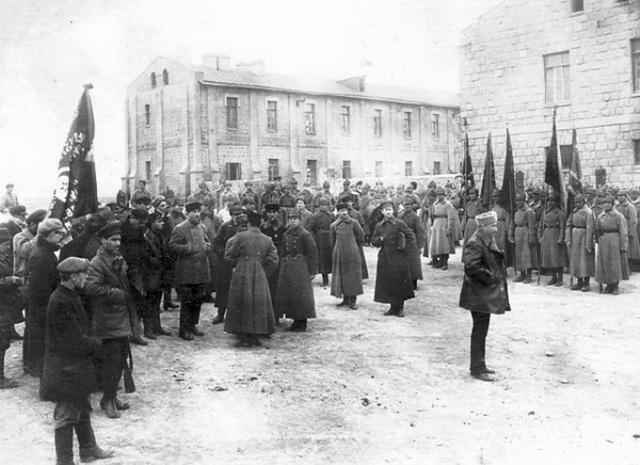
In 1920, Azerbaijan became part of the Soviet Union.
During this period:
-
political life was tightly controlled
-
religion was restricted
-
cultural expression was influenced by Soviet ideology
Despite these pressures, Azerbaijani language and traditions survived.
Romans 5:3–4
“Suffering produces perseverance; perseverance, character; and character, hope.”
Independence and Modern Identity


4
In 1991, following the collapse of the Soviet Union, Azerbaijan regained independence.
This marked a new chapter in national identity.
Modern Azerbaijan reflects a blend of:
-
ancient heritage
-
Islamic traditions
-
Turkic cultural roots
-
modern development
Ecclesiastes 3:1
“To everything there is a season, and a time for every purpose under heaven.”
Azerbaijan Today: A Cultural Crossroads


4
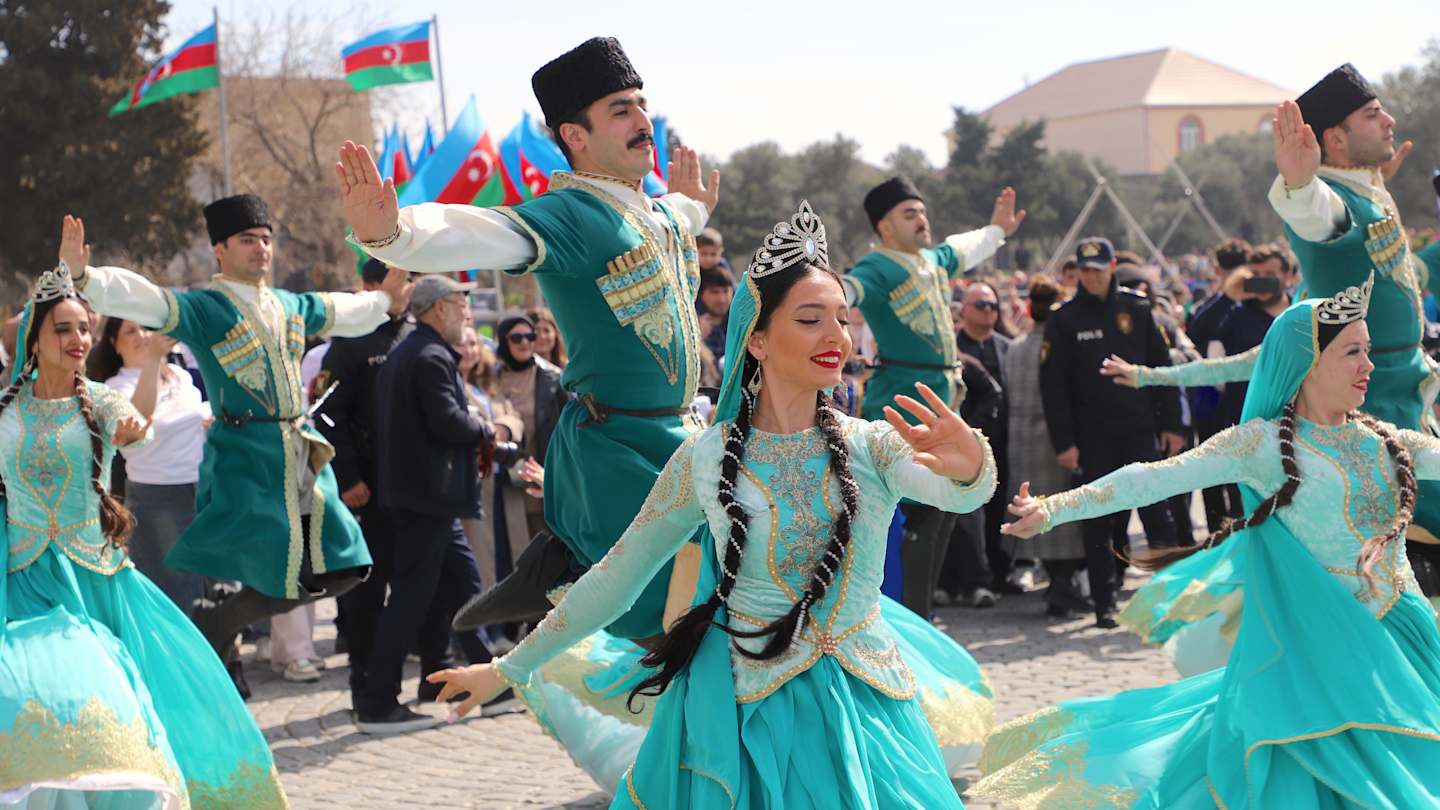
Today, Azerbaijan continues to express its identity through:
-
language
-
music and art
-
historical memory
-
national traditions
Its culture reflects centuries of interaction while maintaining a distinct identity.
Ministry Reflection: Lessons from Azerbaijan
The story of Azerbaijan offers powerful spiritual insights.
Identity Can Form at a Crossroads
A nation can absorb influences without losing itself.
Culture Preserves Continuity
Art, language, and tradition sustain identity.
Resilience Through Change
Even through empire and transformation, identity can endure.
Hebrews 11:1
“Faith is confidence in what we hope for and assurance about what we do not see.”
Prayer Points
Prayer for Azerbaijan
Pray for peace, unity, and continued development.
Prayer for Cultural Identity
Pray that traditions remain strong.
Prayer for Stability
Pray for wisdom in leadership and regional peace.
Prayer for Future Generations
Pray that identity will be preserved and strengthened.
2 Chronicles 7:14
“If my people, who are called by my name, will humble themselves and pray… then I will hear from heaven.”
The Deeper Lesson
Azerbaijan’s story shows that identity can survive at the crossroads of civilizations.
A nation lives through:
-
culture
-
language
-
memory
-
people
Even when shaped by many influences, identity can remain strong.
Similar Tags
Search
Subscribe
Donate



Your Statistics
For the care and safety of this prayer space, we gently record the time and location of each visit. This helps us protect sincerity while preserving anonymity.
Your Date and Time
IP Addres:
216.73.216.29
System
- OS Linux n
- PHP 8.3.30
- MySQLi 10.6.25-MariaDB-log
- Time 01:09
- Caching Disabled
- Gzip Disabled
- Users 6
- Articles 315
- Articles View Hits 6045
Website Visitors Map
About Greg Loucks
Greg Loucks is a writer, poet, filmmaker, musician, and graphic designer, as well as a creative visionary and faith-driven storyteller working at the intersection of language, meaning, and human connection. Born and raised in Phoenix, Arizona, he has lived in Cincinnati, Ohio; Hot Springs, Arkansas; Williams, Arizona; and Flagstaff, Arizona—each place shaping his perspective, resilience, and creative voice.

Address:
United States of America and Europe
Phone Numbers:
Arizona: (928) 563-GREG (4734)
Tennessee: (615) 899-GREG (4734)
Toll-Free: 888-457-GREG (4734)

Terms & Conditions
Subscribe
Report
My comments