


🖊️ Post


🇲🇬 Madagascar: Youth Frustration and Protests in One of the World’s Poorest Nations


4
Madagascar may not dominate global headlines, but it represents one of the clearest examples of a rising protest pattern in lower-income countries:
👉 Extreme economic pressure + youth frustration + weak institutions
Recent protests in Madagascar reflect a growing sense among citizens that:
👉 The system is not delivering basic opportunity, stability, or fairness
Unlike Chile or France—where protests challenge inequality within developed systems—Madagascar’s unrest is rooted in something more fundamental:
👉 Survival-level economic hardship
⚡ What Triggered the Protests
Recent protests have been sparked by a mix of political and economic tensions.
🔥 Key triggers:
• Rising cost of living
• Allegations of political irregularities (including election-related tensions)
• Public dissatisfaction with leadership
💥 Immediate Causes
In some cases, protests intensified around:
👉 Election disputes and accusations of unfair processes
This led to demonstrations in:
• Antananarivo (the capital)
• Other urban areas
📉 Deeper Causes: A System Under Pressure


4
The roots of protest in Madagascar go far deeper than any single event.
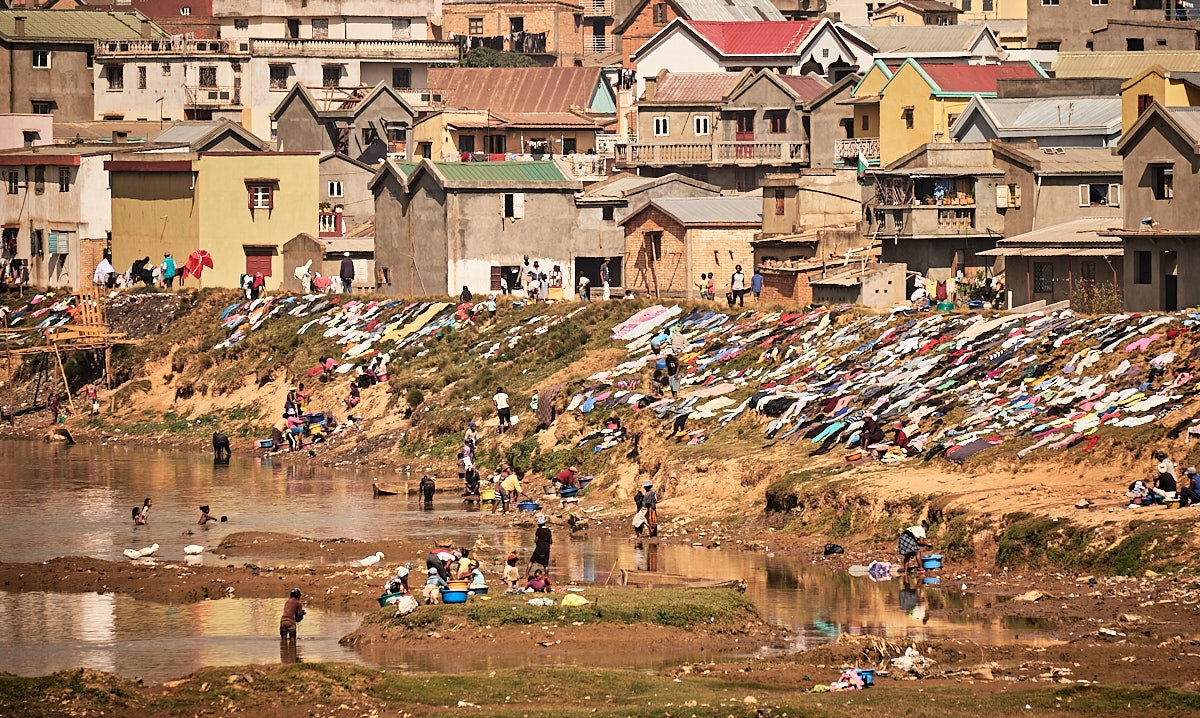
💰 Extreme Poverty
Madagascar is among the poorest countries in the world.
Many citizens face:
• Limited access to basic services
• Food insecurity
• Low wages
👉 This creates:
A constant baseline of frustration
👥 Youth Pressure
Like many countries in your series:
• Large young population
• Limited economic opportunities
👉 Result:
A growing generation with few prospects
⚖️ Weak Institutions
A major issue:
• Limited trust in political institutions
• Governance challenges
• Perception of corruption
👉 This leads to:
Low confidence in peaceful change through institutions
🔥 How the Protests Spread


4
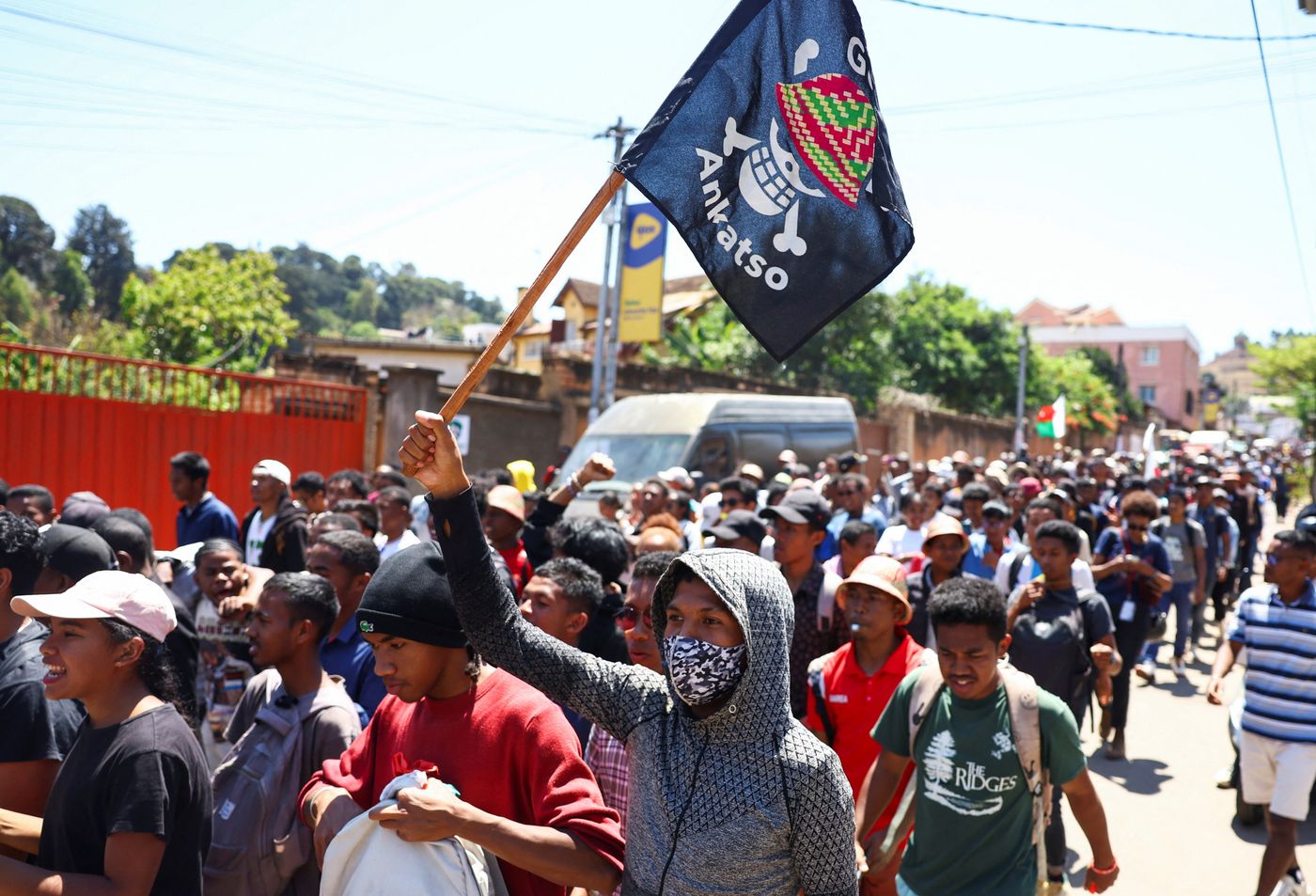
Protests have been concentrated in urban areas but reflect broader national frustration.
Participants include:
• Youth
• Workers
• Urban residents
🔑 Key Features:
• Focus on economic hardship
• Political dissatisfaction
• Growing youth involvement
👉 Compared to other movements:
Less digitally driven, more physically localized
⚔️ Government Response


4
The government response has included:
• Police presence
• Crowd control
• Arrests in some cases
Compared to countries like Iran or Peru:
👉 The response has been controlled but firm
📱 Digital Factor (Limited but Growing)


4
Unlike Kenya or Hong Kong:
• Digital mobilization is less dominant
• Internet access is more limited
However:
👉 Digital activism is growing and may shape future protests
🧠 Why Madagascar Matters
Madagascar represents a different—but critical—type of protest environment.
🔑 Key Characteristics
1. Survival-Level Economics
Protests driven by basic needs
2. Youth Pressure
A growing young population with limited opportunities
3. Weak State Capacity
Limited ability to respond effectively
4. Low Global Visibility
Important movements happening outside global spotlight
🌍 Madagascar in the Global Pattern
Madagascar aligns with:
• 🇳🇬 Nigeria → poverty + youth frustration
• 🇰🇪 Kenya → economic protests
• 🇳🇵 Nepal → governance dissatisfaction
🔁 Pattern Match:
-
Economic hardship
-
Youth frustration
-
Political distrust
-
Localized protests
-
Government containment
🔮 What Happens Next?
Madagascar is likely to experience:
👉 Recurring protest cycles
Future risks include:
• Economic shocks
• Political instability
• Increased youth mobilization
👉 Long-term risk:
Higher than many countries due to structural weakness
🧠 Final Reflection
Madagascar highlights an important truth in your global series:
👉 Protests are not only about politics—they are often about survival
It shows that:
• Poverty can be as powerful a driver as ideology
• Youth frustration is universal
• Even less visible countries are part of the global protest wave
🔚 Key Insight
Madagascar is not just a small case—
it represents the foundation of unrest in much of the developing world.
Similar Tags
Search
Subscribe
Donate



Your Statistics
For the care and safety of this prayer space, we gently record the time and location of each visit. This helps us protect sincerity while preserving anonymity.
Your Date and Time
IP Addres:
216.73.216.29
System
- OS Linux n
- PHP 8.3.30
- MySQLi 10.6.25-MariaDB-log
- Time 06:19
- Caching Disabled
- Gzip Disabled
- Users 8
- Articles 315
- Articles View Hits 6272
Website Visitors Map
About Greg Loucks
Greg Loucks is a writer, poet, filmmaker, musician, and graphic designer, as well as a creative visionary and faith-driven storyteller working at the intersection of language, meaning, and human connection. Born and raised in Phoenix, Arizona, he has lived in Cincinnati, Ohio; Hot Springs, Arkansas; Williams, Arizona; and Flagstaff, Arizona—each place shaping his perspective, resilience, and creative voice.

Address:
United States of America and Europe
Phone Numbers:
Arizona: (928) 563-GREG (4734)
Tennessee: (615) 899-GREG (4734)
Toll-Free: 888-457-GREG (4734)
Terms & Conditions
Subscribe
Report
My comments