


🖊️ Post


🇻🇪 Venezuela: Protest, Collapse, and the Crisis That Wouldn’t Break the System


4
The Venezuelan protest movement (2014–present) is one of the most complex and prolonged uprisings of the modern era.
Unlike Chile—where protests led to constitutional reform—or the Arab Spring—where regimes often fell or collapsed—Venezuela represents a different outcome:
👉 Mass protest without successful regime change, combined with economic collapse and long-term crisis.
Over the past decade, millions of Venezuelans have taken to the streets demanding political change, economic stability, and basic living conditions.
Yet despite:
• Massive demonstrations
• International pressure
• Political opposition movements
👉 The government has remained in power.
Venezuela stands as one of the clearest examples of how modern protest movements can reach maximum intensity—and still fail to achieve immediate transformation.
Venezuela Before the Protests
To understand the protests, it is necessary to look at Venezuela’s political and economic trajectory.
Under Hugo Chávez (1999–2013), Venezuela adopted a model known as the Bolivarian Revolution, which emphasized:
• State control over resources
• Social welfare programs
• Redistribution of wealth
After Chávez’s death, Nicolás Maduro became president in 2013.
However, Venezuela began to experience severe problems:
• Economic mismanagement
• Falling oil prices
• Hyperinflation
• Shortages of food and medicine
By the mid-2010s, the country was facing one of the worst economic crises in modern history.
Millions of citizens began to struggle with basic survival.
The First Wave: 2014 Protests


4
The first major wave of protests erupted in 2014.
Demonstrators were driven by:
• Rising crime
• Inflation
• Shortages of basic goods
Protests quickly spread across major cities.
Clashes between protesters and security forces became common.
Reports indicated:
• Dozens of deaths
• Hundreds of arrests
• Use of force by authorities
The 2014 protests marked the beginning of a long cycle of unrest.
The 2017 Uprising


4
A second, even larger wave of protests occurred in 2017.
The trigger was a political crisis in which the government moved to strip power from the opposition-controlled National Assembly.
The response was immediate and intense:
• Nationwide demonstrations
• Daily protests lasting months
• Large-scale clashes
The unrest resulted in:
• Over 100 deaths during months of protests
• Thousands of arrests
• Widespread international attention
Despite the scale of the protests, the government retained control.
The 2019 Crisis: Two Presidents


4
The most dramatic moment came in 2019, when Venezuela entered a full political crisis.
After a disputed election, opposition leader Juan Guaidó declared himself interim president.
This created a situation where:
• Nicolás Maduro controlled the state
• Juan Guaidó was recognized by many countries internationally
Mass protests erupted across the country.
Demonstrators demanded:
• Maduro’s resignation
• Free elections
• Political transition
Tens of thousands participated in rallies .
However:
• The military remained loyal to Maduro
• Government institutions stayed intact
👉 The protest movement reached its peak—but did not succeed.
The Humanitarian Crisis


4
At the same time as political unrest, Venezuela experienced a severe humanitarian crisis.
Key conditions included:
• Hyperinflation
• Food shortages
• Collapse of healthcare systems
• Mass migration
More than 7 million people have left the country since 2015 .
For many citizens, daily life became a struggle for survival.
Government Response and Control

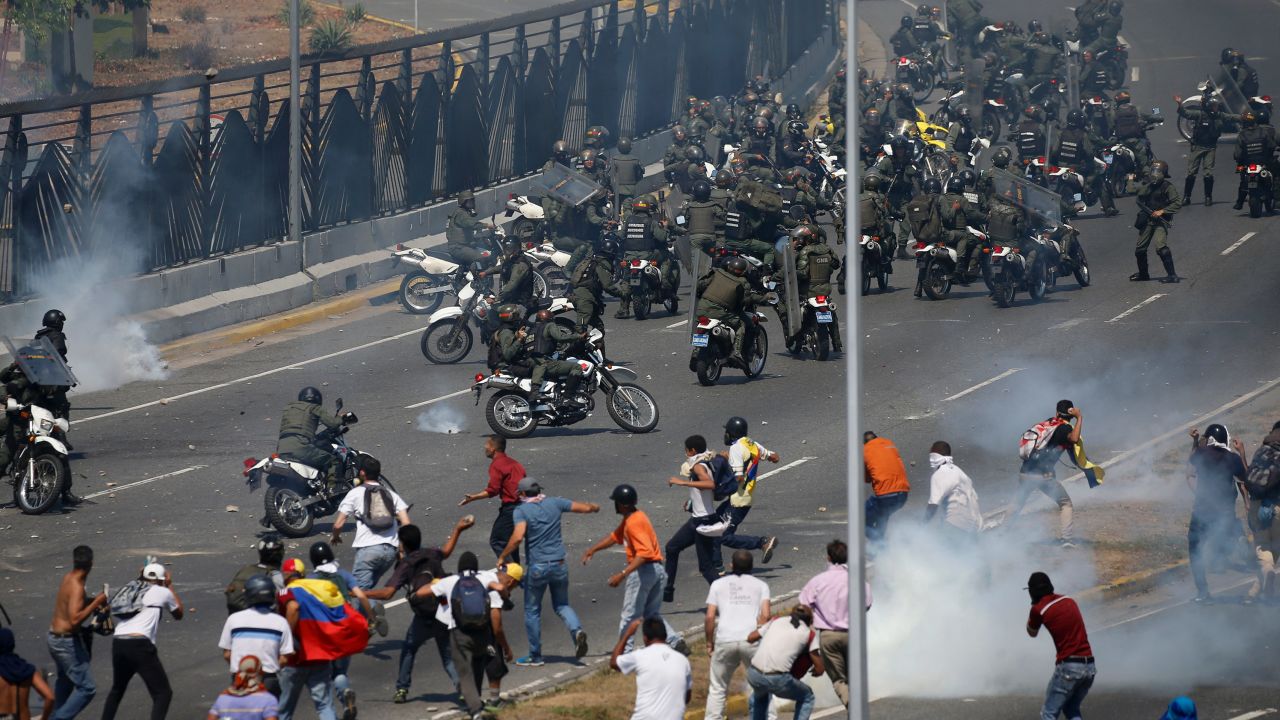

4
The Venezuelan government responded to protests with a combination of:
• Security force deployment
• Arrests of opposition figures
• Control over institutions
• Support from loyal groups
Reports documented:
• Use of force against demonstrators
• Detentions and casualties during protests
At the same time, the government maintained:
• Control over the military
• Influence over key institutions
These factors prevented the protest movement from achieving regime change.
Why the Movement Did Not Succeed
Venezuela highlights a critical lesson in modern protest movements:
👉 Mass protests alone are not enough.
Key reasons include:
Military Loyalty
-
The armed forces remained aligned with the government
State Control
-
Institutions were tightly controlled
Fragmented Opposition
-
Divisions weakened strategy
Economic Collapse
-
Survival needs limited sustained mobilization
Geopolitical Factors
-
International actors supported different sides
Venezuela Today
Today, Venezuela remains in a prolonged crisis.
The political system continues under Nicolás Maduro, while:
• Economic challenges persist
• Migration continues
• Political tensions remain unresolved
Protests still occur, but at lower intensity compared to earlier peaks.
Why Venezuela Matters
Venezuela is one of the most important cases in your entire series.
It represents:
👉 The limit of protest power.
It shows that:
• Even massive movements can fail to achieve change
• Strong state control can withstand prolonged unrest
• Economic collapse does not automatically lead to revolution
Venezuela in the Global Pattern
Compared to other cases:
| Country | Outcome |
|---|---|
| Tunisia | Reform |
| Chile | System change |
| Libya | Collapse |
| Syria | War |
| Venezuela | Stalemate |
Final Reflection
Venezuela stands as one of the most sobering examples of modern uprisings.
It reveals a difficult truth:
👉 The harder part of revolution is not rising up—it is breaking through.
Despite years of protests, global attention, and internal pressure:
• The system endured
• The crisis deepened
• The outcome remains unresolved
Similar Tags
Search
Subscribe
Donate



Your Statistics
For the care and safety of this prayer space, we gently record the time and location of each visit. This helps us protect sincerity while preserving anonymity.
Your Date and Time
IP Addres:
216.73.216.29
System
- OS Linux n
- PHP 8.3.30
- MySQLi 10.6.25-MariaDB-log
- Time 08:48
- Caching Disabled
- Gzip Disabled
- Users 9
- Articles 315
- Articles View Hits 6300
Website Visitors Map
About Greg Loucks
Greg Loucks is a writer, poet, filmmaker, musician, and graphic designer, as well as a creative visionary and faith-driven storyteller working at the intersection of language, meaning, and human connection. Born and raised in Phoenix, Arizona, he has lived in Cincinnati, Ohio; Hot Springs, Arkansas; Williams, Arizona; and Flagstaff, Arizona—each place shaping his perspective, resilience, and creative voice.

Address:
United States of America and Europe
Phone Numbers:
Arizona: (928) 563-GREG (4734)
Tennessee: (615) 899-GREG (4734)
Toll-Free: 888-457-GREG (4734)
Terms & Conditions
Subscribe
Report
My comments